


S Sheeba1*, V. Shanthi Serene Sylum1, Gokul Krishna2, Reshma Reghu3, S Sanju4, SS Ramya5 and JP Shimmal Chenthik5
1Department of Obstetrics and Gynaecology, Sarada Krishna Homoeopathic Medical College, (Affiliated to The Tamil Nadu Dr. M.G.R. Medical University, Chennai), Kulasekharam, Kanyakumari District, Tamilnadu, India
2Department of Materia Medica, Sarada Krishna Homoeopathic Medical College (Affiliated to The Tamil Nadu Dr. M.G.R. Medical University, Chennai), Kulasekharam, Kanyakumari District, Tamilnadu, India
3Department of Community Medicine, Sarada Krishna Homoeopathic Medical College, (Affiliated to The Tamil Nadu Dr. M.G.R. Medical University, Chennai), Kulasekharam, Kanniyakumari District, Tamilnadu, India
4Department of Forensic Medicine and Toxicology, Sarada Krishna Homoeopathic Medical College, India (Affiliated to The Tamil Nadu Dr. M.G.R. Medical University, Chennai), Kulasekharam, Kanniyakumari District, Tamilnadu, India
5Department of Homoeopathic Pharmacy, Sarada Krishna Homoeopathic Medical College, (Affiliated to The Tamil Nadu Dr. M.G.R. Medical University, Chennai), Kulasekharam, Kanyakumari District, Tamilnadu, India
*Corresponding Author: S Sheeba, Department of Obstetrics and Gynaecology, Sarada Krishna Homoeopathic Medical College, (Affiliated to The Tamil Nadu Dr. M.G.R. Medical University, Chennai), Kulasekharam, Kanyakumari District, Tamilnadu, India.
Received date: 02 Jan, 2026; Accepted date: 16 Jan, 2026; Published date: 26 Jan, 2026
Citation: S Sheeba, V. Shanthi Serene Sylum, Gokul Krishna, Reshma Reghu, S Sanju, SS Ramya and JP Shimmal Chenthik. “A Clinical Study on Dysfunctional Uterine Bleeding by Overwhelming the Potential of Homoeopathic Medicine Millefolium 200 Potency.” J Gynecol Matern Health (2026): 124. DOI: 10.59462/3068-3696.4.1.126
Copyright: © 2026 S Sheeba. This is an open-access article distributed under the terms of the Creative Commons Attribution License, which permits unrestricted use, distribution, and reproduction in any medium, provided the original author and source are credited
Formerly in turnout no intrinsic disorders present, abnormal uterine bleeding is known as dysfunctional uterine bleeding, or DUB. It may or may not be ovulatory. In this case, there are no structural abnormalities linked to the menorrhagia. Adolescent girls shortly after menarche and women prior to menopause are more likely to experience it. In the world, 3–30% of women experience abnormal uterine bleeding. Twenty-five percent of the affected women are in the reproductive age range. Medical therapies are often offered first. For DUB, alternatives include oral progestin’s, combination oral contraceptive pills (OCPs), and intravenous (IV) conjugated equine oestrogen. Homeopathy selects the Similimum by taking into account the physical, emotional, and mental symptoms of the individual as a whole. When there is significant bleeding and weakness, Millefolium is recommended. Initially, we want to determine whether Millefolium, Dysfunctional uterine bleeding can be effectively treated with a homeopathic drug. Through the analysis of five cases, I intend to demonstrate and differentiate the remarkable efficacy of Millefolium in treating dysfunctional uterine bleeding. They have also been demonstrated to improve patients' disturbed vitality.
Keywords: Contraceptive pills, Dysfunctional Uterine Bleeding, Homoeopathy, Millefolium, Similimum.
Dysfunctional uterine bleeding (DUB) is abnormal endometrial bleeding that occurs without pelvic illness. [1,2] Dysfunctional uterine hemorrhage is a common gynaecologic disorder that can affect any woman in her reproductive years. [3] It has an impact on women's health from a medical and social stance. [4,5] Adolescent and premenopausal females are more likely to experience it. It may or may not be ovulatory. [6] Anovulation is responsible for 90% of cases of dysfunctional uterine hemorrhage, whereas ovulatory cycles are responsible for 10% of cases. During the extremes of reproductive life, ovulatory dysfunctional uterine hemorrhage is more common and is caused by an imbalance in the hypothalamic-pituitary-ovarian axis. The majority of ovulatory DUB cases occur in parous women between the ages of 30 and 45. Changes in mood or energy levels, pelvic pain, or breast discomfort precede menstrual flows. uneasiness, and sequences are consistent and probable. [7]
Heavy menstrual bleeding, spotting in between periods, post-coital bleeding, lengthier monthly cycles, and the passage of big clots are the main indications of dysfunctional uterine bleeding. Additional symptoms may include pale complexion, low blood pressure, high heart rates, weakness, disorientation, breast tenderness, and pelvic discomfort. The laboratory tests that may be carried out include thyroid function tests, prolactin, ferritin, coagulation panel, gonadotropins, and complete blood counts, to appellation an insufficient. [8] Hysteroscopy, MRI, and transvaginal ultrasound are examples of imaging tests. Ovarian abnormalities, leiomyoma’s (fibroid tumours), Adenomyosis, endometrial thickness, and uterine size and shape can all be seen by transvaginal ultrasonography. [9] It is advised to obtain this essential tool at the beginning of the investigation of irregular uterine flow.
The most successful medical treatment for dysfunctional uterine haemorrhage is antifibrinolytic tranexamic acid. Medical therapies are often offered first. For DUB, alternatives include oral progestin’s, combination oral contraceptive pills (OCPs), and intravenous (IV) conjugated equine oestrogen. [3] Endometrial resection is superior to standard medical therapy in terms of patient satisfaction and health-related quality of life. Levonorgestrol-releasing intrauterine devices are a successful therapeutic option. [8] Endometrial ablation, endometrial resection, hysterectomy, and dilatation and curettage are surgical therapy options. Homeopathy has shown promising results for a number of gynaecological conditions.
The cases structured the investigation as a retrospective cohort study since five instances of dysfunctional uterine bleeding were chosen from the Sarada Krishna Homoeopathic Medical College OPD. A simple random sample is a subset of people (a sample) selected from a larger group (a population) using the simple random sampling approach. Every individual is selected at random and completely by chance, such that every group of individuals has the same chance of being selected for the sample as every other subset of individuals, and every individual has the similar fortuitous of being selected at any point throughout the sampling process. Pregnant ladies, chronic disease patients, and patients with other systemic illnesses are avoided. instances in which Millefolium, a homoeopathic remedy, was administered as Homoeopathic similimum with the appropriate dosage and strength based on the principles of homeopathy described in Fig:1. Included are comparisons of instances before and after homeopathic treatment. The severity of the symptom score is the basis for assessment.
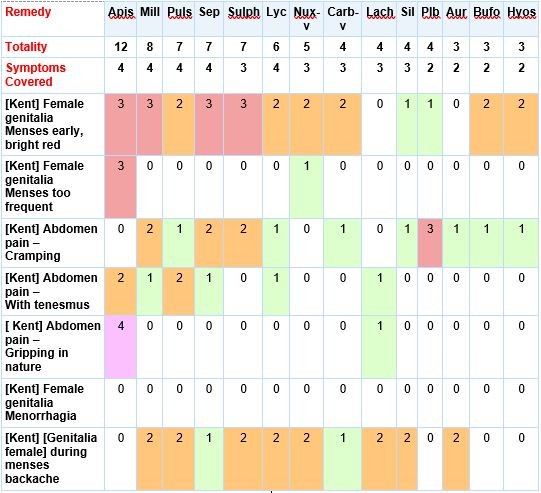
Fig:1 Distribution of steps according to the case taking, analysis and evaluation.
At this juncture, the consequences of research through five cases of dysfunctional uterine bleeding, its instances befall terminated least possible for six months, and the outcomes are discussed below in relation to symptom similarity. The efficacy of Millefolium, a Homeopathic treatment preferred for its symptom similarities, is scrutinized. The severity of symptoms remained trailed over spell. To determine if the pre-treatment and post-treatment scores were significant, statistical analysis was performed (Table.1). The findings were analysed in light of the symptoms, charted, and documented for the research. Millefolium is a constitutionally adopted homoeopathic medicine whose efficacy is based on chronic totality. When there is significant bleeding and weakness, Millefolium is recommended. [10] The study's findings demonstrate that, as is probably the case, utilizing homeopathic therapy and management can significantly lessen symptoms. Among the many benefits our homoeopathic system provides to humanity is the dimensions to hire Homoeopathic medicines to more effectively statement and afresh emerging illnesses
|
NATURE OF SYMPTOMS |
BEFORE TREATMENT S |
AFTER TREATMENT |
|
Pelvic pain |
8 |
0 |
|
Menorrhagia |
6 |
1 |
|
Bleeding between periods |
7 |
1 |
|
Heavy menstrual bleeding |
9 |
0 |
|
Menses too early |
9 |
0 |
|
Weakness |
9 |
0 |
|
Polymenorrhoea |
8 |
1 |
|
Clots |
9 |
0 |
|
Shortness of breath |
8 |
0 |
|
Backache |
8 |
0 |
Table 1: Showing the distribution of patients according to the symptoms
The purpose of this study is to provide well-lit on exactly how well the Homeopathic medicine. Millefolium 200 potency is aspirant to preserve dysfunctional uterine hemorrhage. Samuel Hahnemann, our teacher, states in the combined fifth and sixth editions of the Organon of Medicine that it is particularly important to pay attention to pregnancy, sterility, sexual desire, accouchements, miscarriages, nursing, and the condition of the monthly discharge when it comes to chronic illnesses of females. Regarding the last-named specifically, we should not forget to find out how many days it lasts, whether its flow is continuous or interrupted, how dark its colour is, whether leucorrhoea occurs before or after its termination, whether it recurs too frequently, or whether it is delayed past the appropriate time. (10) If there is leucorrhoea, describe its nature, the feelings that accompany its flow, the amount, and the situations and occasions under which it happens. If not, describe the physiological or mental diseases, sensations, and pains that precede, accompany, or monitor the status quo. [11]
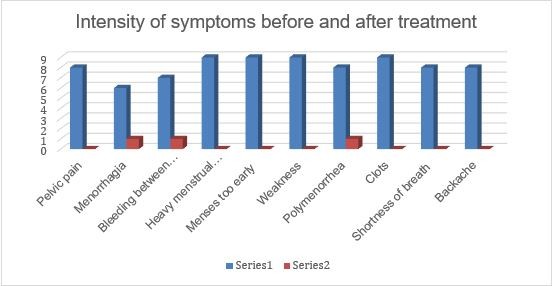
Fig 2: Intensity of symptoms Before (Series - I) and After treatment (Series -II)
Heavy menstrual uterine bleeding without a known reason is known as dysfunctional uterine bleeding [4] DUB is the term used to describe any abnormal bleeding, such as anomalies in the menstrual cycle, regular or irregular uterine bleeding, and variations in the amount or length of monthly blood loss. Nonetheless, the term is most commonly used to describe essential menorrhagia or severe regular menstrual flow. [11] The most common cause of DUB in teenagers is anovulation, which usually happens in the first two to three years following menarche and is associated with hypothalamic-pituitary-ovarian axis immaturity. [12] While 10% of the population experiences objective menorrhagia, a third of women of reproductive age report subjective menorrhagia. [13]
While in progress of investigation, we found that Millefolium, a homoeopathic remedy, worked well for treating dysfunctional uterine hemorrhage. Five examples in all were chosen at random. Following a thorough review based on the totality of the symptoms that were documented, the cases were prescribed. The study's findings were derived via observations and statistical analysis. The effectiveness of homeopathic therapy for dysfunctional uterine bleeding is determined by analysing improvement ratings and symptoms. Therefore, homoeopathic dilutions are beneficial to humanity and work best for dysfunctional uterine hemorrhage. [14] One of the important things to keep in mind was the grading of symptoms. Following a thorough examination of the cases based on the totality of symptoms, which were subsequently connected with remedy indications
According to the Homoeopathic master, those who often attribute the cause of chronic illnesses to last-named conditions should not forget to determine whether they occur frequently or later than expected, how many days they last, whether they flow continuously or intermittently, how dark they are overall, whether they have leucorrhoea before or after they end, and whether they are preceded, accompanied, or followed by mental illnesses, sensations, and pains. [15,16] However, the onset and progression of a serious, persistent disease must be caused by noxious forces; the assigned reasons might merely activate the dormant chronic miasm. [17,18] Based on symptom analysis, scores of both before and after therapy are noted. When a significant decline in scores was seen, this study was interpreted. Thus, we may infer that dysfunctional uterine hemorrhage can be effectively treated by administering the homoeopathic medication Millefolium 200 potency.
Casablanca, Yovanni. "Management of dysfunctional uterine bleeding." Obstetrics and gynecology clinics of North America 35, no. 2 (2008): 219-234.
Rimsza, Mary E. "Dysfunctional uterine bleeding." Pediatrics in Review 23, no. 7 (2002): 227-233.
Davis E, Sparzak PB. Abnormal uterine bleeding with Endocrinology changes 2019 July 7;6(3):120-28.
Farrell, Elizabeth. "Dysfunctional uterine bleeding." Australian family physician 33, no. 11 (2004): 906-908.
Wren, B. G. "Dysfunctional uterine bleeding." Australian family physician 27, no. 5 (1998): 371-377.
Livingstone, Verity H. "Dysfunctional Uterine Bleeding." Canadian Family Physician 33 (1987): 2563.
Strickier, Ronald C. "Dysfunctional uterine bleeding in ovulatory women." Postgraduate Medicine 77, no. 1 (1985): 235-246.
Sheeba, S., K. Gokul Krishna, Premalata B. Rotti, T. Madhavi Chandra, and Fathima Shahunaj. "GYNECOLOGICAL DISORDERS IN PREGNANCY: ANATOMY, PATHOPHYSIOLOGY, AND CLINICAL PERSPECTIVES."
Bongers, Marlies Y., Ben WJ Mol, and Hans AM Brölmann. "Current treatment of dysfunctional uterine bleeding." Maturitas 47, no. 3 (2004): 159-174.
Samuel, Hahnemannn. "Organon of Medicine. fifth and sixth edition. New delhi: Kuldeep Jain, B." (2004).
Aphale, Parth, and Atul Rajgurav. "To study the efficacy of sabina, cimicifuga and thalaspi bursa in management of cases of dysfunctional uterine bleedings." International Journal of Reproduction, Contraception, Obstetrics and Gynecology 6, no. 1 (2017): 133-141.
Sheeba, S., K. Gokul Krishna, S. S. Dhanya, C. Sherin Sheeba3 S. Sundarapandiyaraj, and Sruthi Krishna. "Investigating The Role Of Homeopathy In Managing Pcos Through A Retrospective Analysis With Miasmatic Considerations."
Khan, Rehana, Rana K. Sherwani, Safia Rana, Seema Hakim, and Zeeba S. Jairajpuri. "Clinco-pathological patterns in women with dysfunctional uterine bleeding." Iranian journal of pathology 11, no. 1 (2016): 20.
Devika, C., S. Arjun, M. Indhumathi, R. Sibin, and S. Sheeba. "Modern advances in nanoparticle: Based strategies for protagonist defensive and beneficial tactics against COVID-19."
Deligeoroglou, Efthimios, Vasileios Karountzos, and George Creatsas. "Abnormal uterine bleeding and dysfunctional uterine bleeding in pediatric and adolescent gynecology." Gynecological Endocrinology 29, no. 1 (2013): 74-78.
Prentice, Andrew. "Health care implications of dysfunctional uterine bleeding." Best Practice & Research Clinical Obstetrics & Gynaecology 13, no. 2 (1999): 181-188.
Sheeba S, Sylum VSS, Reghu R, Sanju SSS, Ramya S. Clinical Study to Determine the Effectiveness of Pulsatilla Nigricans in the Management of Hypothyroidism with PCOD. Open Access Journal of Gynaecology. 2025;10(1):000299. doi:10.23880/oajg-16000299