


Dr. Rohina Aggarwal1 *, Dr Deepa Shah2 , Dr Kunur Shah3 , Dr Sumesh Choudhary4 , Dr Smit Solanki5 , Hardik Sheth4
Professor and Head, Department of Obstetrics and Gynaecology, Institute of Kidney Diseases & Research Centre (IKDRC), Ahmedabad, India
Asso. Professor, B.P.Koirala Institute of Health Sciences, Dharan, Nepal
Institute of Kidney Disease and Research Centre, Ahmedabad
Institute of Kidney Disease and Research Centre
Parul Sevashram Hospital, Vadodara, Gujarat
*Corresponding Author: Dr. Rohina Aggarwal, Professor and Head, Department of Obstetrics and Gynaecology, Institute of Kidney Diseases & Research Centre (IKDRC), Institute of Transplantation Sciences (ITS), Ahmedabad, India.
Email: drrohinaaggarwal@gmail.com
Received: 01 Dec, 2025; Accepted: 12 Dec, 2025; Published: 19 Dec, 2025.
Citation: Rohina Aggarwal, Deepa S, and Kunur S et al. “Effect of Recombinant FSH versus Human Menopausal Gonadotropin on Embryo Profile in Assisted Reproduction Patients.” J Gynecol Matern Health (2025): 123. DOI: 10.59462/3068-3696.3.2.123
Copyright: © 2025 Rohina Aggarwal. This is an open-access article distributed under the terms of the Creative Commons Attribution License, which permits unrestricted use, distribution, and reproduction in any medium, provided the original author and source are credited.
Introduction: The impact of different gonadotropins on the outcome of assisted reproduction has been widely debated. The differences in oocyte and embryo quality with the rFSH and hMG may also influence the clinical outcome.
Aims/ Objectives: To determine the effectiveness of rFSH and hMG on ovarian stimulation in terms of embryo profile (total number of oocytes, percentage of mature oocytes, fertilization rate, number of grade A embryos).
Methods: A retrospective observational study was conducted whereby the medical records of all the patients who underwent ovarian stimulation for assisted reproduction using rFSH or hMG from January 2022 to December 2023 were reviewed. All the required information in terms of dose and duration of treatment, and embryo profile (total oocytes/ mature oocytes, fertilization rate, and grade A embryos) were noted and analyzed.
Results: A total of 561 cases were eligible for enrollment, of which 329 received rFSH and 232 received hMG. The mean age and body mass index of the cases in the hMG group were significantly higher. The total number of oocytes, percentage of mature oocytes, total number of embryos, and number of grade A embryos were positively associated in the rFSH group on multivariate analysis.
Conclusion: As the embryo profile in the women receiving rFSH was significantly better than those receiving hMG, FSH alone is perhaps enough for ovarian stimulation in assisted reproduction cycles. However, further studies with participants of a comparable age group and endocrinological profile in both drug groups are recommended to overcome the possible effect of age and ovarian reserve as confounding factors in this study.
World Health Organization defines infertility as a disease of the male or female reproductive system characterized by the failure to achieve pregnancy after 12 months or more of regular unprotected sexual intercourse [1]. Treatment of infertility comprises various strategies including medical therapy, surgical therapy, and assisted reproductive technology (ART) [2].
ART is now a leading choice of treatment for infertility and in vitro fertilization/ intracytoplasmic sperm injection are well-acknowledged procedures in ART. IVF procedures consist of various steps of which one of the most important steps is controlled ovarian hyperstimulation (COH) whereby the ovaries are stimulated using gonadotropins, such as recombinant Follicle Stimulating Hormone (rFSH) or human Menopausal Gonadotropin (hMG) [2].
The impact of these different gonadotropin preparations on the treatment outcome in women undergoing COH for assisted reproductive technologies has been widely debated [3]. In COH, the role of FSH is vital but the significance of luteinizing hormone (LH) supplementation is controversial [4].
Most of the studies by far have focused on the clinical outcomes associated with these different types of gonadotropins. However, the embryology aspect has been widely overlooked. It is of utmost need to understand if there are relevant differences in oocyte and embryo quality parameters with the different gonadotrophin preparations used for COH as these outcomes may influence the clinical outcome as well [5,6].
With this background, this study aimed to investigate and compare the embryo profile of patients receiving human menopausal gonadotropin and recombinant FSH for controlled ovarian hyperstimulation in ART cycles. Secondarily, the duration of treatment with gonadotropin was also compared and the outcomes of each group were further compared in younger and advanced reproductive-aged women.
Study Setting
Department of Obstetrics and Gynecology, Institute of Kidney Disease and Research Centre and Institute of Transplantation Sciences, Ahmedabad, Gujarat.
Study Design
A retrospective observational study was conducted to compare the embryo profile of patients undergoing ovarian stimulation using recombinant follicle-stimulating hormone and human menopausal gonadotropin.
Data Collection
The data collection process involved detailed interviews with the patients and comprehensive clinical examinations. All relevant information was meticulously recorded in standardized case records, following the guidelines established by SKHMC. This standardization ensured consistency in data documentation and allowed for a thorough analysis of each case.
Treatment Procedures
To determine the appropriate homeopathic treatment, a totality of symptoms was established for each patient. This process involved a holistic assessment of each individual’s symptoms, personality traits, and overall constitution, in accordance with the principles of homeopathy. The selection of the remedy, Thuja Occidentalis, was made by consulting the Homeopathic Materia Medica and various repertories, ensuring that the chosen treatment aligned with the patient’s unique symptom profile.
Following the administration of the remedy, patients were closely monitored over a specified period. The outcomes were systematically recorded and analyzed, with particular attention given to changes in symptoms and overall health status. The inferences drawn from these follow-up assessments provided insights into the efficacy of Thuja Occidentalis in managing the symptoms of PCOS, contributing valuable information to the understanding of homeopathic treatment in this context. The distribution of symptoms is shown in fig:1.
In aphorism 5, deals with exciting cause and fundamental cause which is due to chronic miasm. Hahnemann says to take into consideration the total person during the course of investigating their health. Aphorism 260 deals with obstacles to cure. In order to remove such obstacles intercurrent remedies must be prescribed. Chronic intercurrent are those medicines which are usually given as anti-miasmatic remedies in the midst of the chronic treatment for miasmatic blocks, suppressions and obstacles to the cure. The communal Intercurrent therapies are stated under the affiliation of medications in Materia Medica or in convinced staging. [9,10] The intercurrent medicine, Thuja Occidentalis medicine is usually prescribed to women if they have multiple cysts within the left ovary. These cysts may not cause much inflammation, but will be quite painful. It is also prescribed in cases where a woman may get male pattern hair growth on the body. Thuja is very effective is dissolving cysts and thus can quickly correct hormonal imbalances. Thuja Occidentalis is excellent for ovarian cyst, especially left side. There is sometimes inflammation of left ovary with severe pain, at every menstrual period. The menses is scanty or retarded, too early or too short. [10]
| Sl.no | Symptoms | Before treatment | After treatment |
|---|---|---|---|
| 1 | Irregular menses | 11 | 1 |
| 2 | Amenorrhea | 12 | 4 |
| 3 | Menorrhagia | 15 | 3 |
| 4 | Hirsutism | 16 | 2 |
| 5 | Acanthosis Nigricans | 10 | 1 |
| 6 | Skin tags | 12 | 1 |
| 7 | Back pain | 11 | 4 |
| 8 | Lower abdominal pain | 13 | 3 |
| 9 | Weakness before menses | 18 | 1 |
| 10 | Acne | 17 | 5 |
Table 1: Distribution of Symptoms
General Indications for the use of intercurrent are poor/ slow/ inadequate/ short lasting/ superficial re-sponse to the indicated constitutional remedy, inadequate similarity, inadequate potency, inadequate repetition, genetics load, dominant miasm is active and the system depressed, morbid Constitution and Diathesis, energy reservoir- poor, indolent system, sycotic dominance, suppression [11] Dr Hahnemann explained in foot note of aphorism 94, “in chronic diseases especially the females necessary to pay attention to pregnancy, sterility, sexual desire, accouchements, miscarriage, suckling, and the state of the menstrual discharge [12] Dr. Samuel Hahnemann explains in foot note of aphorism 81 about the life style disorders i.e. some of these causes that exercise a modifying influence on the transformation of psora into chronic diseases.[13] Manifestly depends on the climate alterations, physical variations, character of the abode places, both have been neglected. So, by the diet and regimen, passions, manners, habits and customs of various kinds are should be considered. [14]
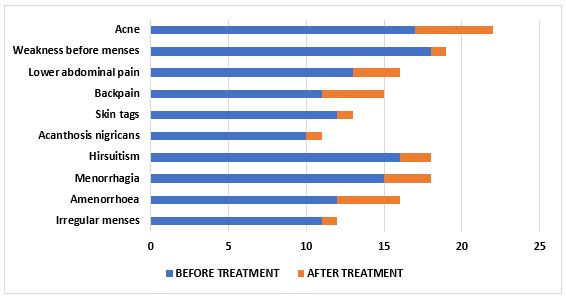
PCOS Present with different level of Symptoms like sporadic, rare periods inside 3 or 4years of beginning discharge lighter overwhelming during period, weight gain, and unnecessary hair growth to changing degrees on face, chest, and lower midriff. The striking feature of remedy administered, which derive over the guiding symptoms, common and trivial symptom progression with reduction in size of cyst. [15] But consequently, polycystic size reduced, her menses become regular, her associated symptoms are condensed toms, acne and hair growth on face are improved. Our master Dr. Hahnemann had given specific diet and mode of living for the patients who are under Homeopathic treatment for a chronic disease which hinders the cure.Distribution based on age group.
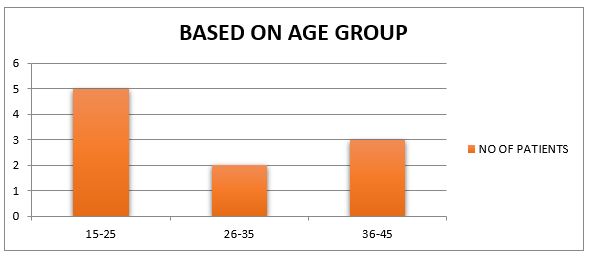
The outcome of the study conducted in 10 cases, most of the symptoms under sycosis, there by the medicine given accordingly to the patient in the basis of constitution with intercurrent remedy. The age of the patients varied from 15 years (youngest, unmarried) to 45 years (married), all of them having a large sized cyst in their left ovary apart from the associated menstrual problem and occasional pain in the abdomen. Through an outlook of patients, medicines were given according to the totality of symptoms either constitutional basis or miasmatic basis. And Thuja Occidentalis given as intercurrent medicine for the improvement of the cases. The cases were taken according to the homeopathic case taking and the totality of symptoms were framed. [16] The symptoms are then analysed and is converted into rubrics. With the help of Miasmatic reference books, miasm related to the rubrics was found out and repertorization was done afterwards [17] and the remedy which covered the maximum rubrics and the miasm was prescribed. Potencies were chosen as per the homeopathic doctrine as suggested in the “Organon of Medicine”.
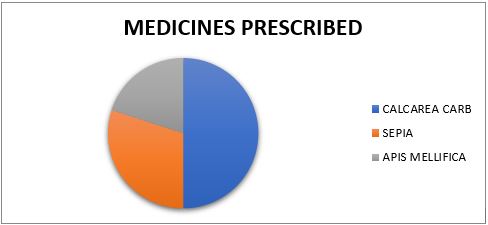
| SL NO | CONSTITUTION BASIS | INTERCURRENT REMEDY (THUJA OCCIDENTALIS) | NO. OFCASES |
|---|---|---|---|
| 1 | Calcarea Carbonica | Twice in a week | 5 |
| 2 | Sepia Officinalis | Twice in a week | 3 |
| 3 | Apis Mellifica | Twice in a week | 2 |
Table 1: Analysis of patients in constitutional basis
Basis on constitution of the patient, medicines were given according to totality of the patient. Through an overlook of 10 cases 5 cases based on Calcarea Carbonica, 3 cases on Sepia Officinalis, 2 cases on Apis Mellifica has covered those symptoms. Then the patients were treated with Thuja Occidentalis as an intercurrent remedy. After giving these medicine patients were feels better mentally and physically. Thuja Occidentalis has an effect on curing irregular menses with presenting conditions of acne, skin tags, hair growth and so on. Thus, the result shows the effectiveness of Thuja Occidentalis as an intercurrent medicine for the treatment of polycystic ovarian syndrome. The symptoms are then analyzed and converted to rubrics.
Thuja has the innate capacity to dissolve and get rid of abnormal growths anywhere in the body. Thus, it is very effective in dissolving ovarian cysts too. Most women who require Thuja have cysts in the left ovary. Apart from this, Thuja is also very effective in treating hirsutism due to PCOS. [14] Thuja Occidentalis is selected as menses has the odour of fish- brine, and stain of the menstrual blood is difficult to wash off. Spasmodic, colicky and paroxysmal pains. Acrid, painful, and with pruritus. Blood is offensive, clotted, and stringy, clots are large and dark, profuse Hyperpigmentation of the skin, and melanomas [15]. Oily skin, incapability to conceive due to hormone imbalance. Tongue usually large and flabby, taking the imprint of teeth, taste metallic or bitter, putrid, gums are soft, spongy recede from teeth and bleed easily. The discharge is mucopurulent, thin, acrid, lumpy with milk in the breasts during menses. weakness and weariness of lower limbs.
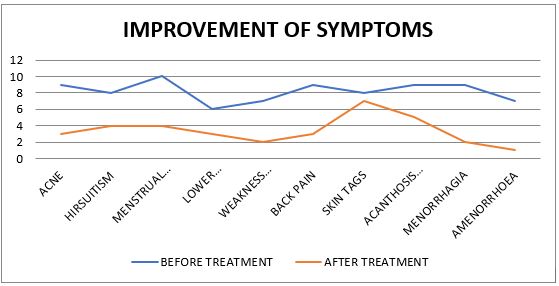
From the study it was concluded that homoeopathy has a great role to play in the cases of Polycystic ovarian syndrome leading to improvement in the individuals. Intercurrent prescribing by taking the whole individual picture of the patient has a great effect in the condition. Results were shown and tabulated in fig:4 and table 3.98% relief were seen in the 10 patients that were taken for study. Mild relief was seen in 2% of patients due to presence of obstacles to cure in certain cases and the reference of this can be found in Organon of medicine in Aphorism. 3 as given by Dr Hahnemann [18]. Aphorism 3 states what is to be cured, what is curative and its application and removing obstacles. Hahnemann ends by saying that homoeopath should treat judiciously and rationally so that he becomes a true practitioner of healing art. Hence the careful investigation into such obstacles to cure is necessary, as their diseases are usually aggravated by such noxious influences and other disease-causing errors in the diet and regimen, which often pass unnoticed. [19,20]
For a true homeopath it becomes essential to know about the miasm of underlying disease condition, it will not only help in deducting the true picture of that individual but also the evolution and prognosis of that condition. [17] Hahnemann was the first physician to use the term “miasms. The constitutional and antimiasmatic treatment of Polycystic ovarian syndrome are of the greatest importance. Polycystic ovarian syndrome is in itself either of some constitutional dyscrasias or of some local exciting cause. Homoeopathic remedies are very beneficial in the treatment of Polycystic ovarian syndrome. Homoeopathic medicines are naturally acting and its material content is very minute in quantity. In Homoeopathy, medicines are selected on the basis of totality of symptoms, either constitutional or miasmatic remedies are given. In this study, Thuja Occidentalis is the medicines prescribed on the basis of miasmatic approach. [20]
A dyscrasias is a sin process or something that makes the body healthier or a disease of a defined character; a general impairment of health; a degeneration, a faulty condition of the body; a morbid diathesis, and a predisposed condition of the state of the organism [19]. The most important contribution of Hahnemann’s explorations into miasms is the concept that layers of predisposition exists. [20] The prescriber systematically peels off the layers of predisposing weaknesses by carefully prescribing each remedy based on totality of symptoms. [21,22] Hahnemann states that homoeopathic treatment must be continued until all the layers of predisposition have been removed [23,24]. Out of 10 cases through this, compiling the method of curing Polycystic ovarian syndrome on the basis of Intercurrent remedy approach.