


Hafiz Moazam Hussain1*, Rimsha2, Wasif Khan Khattak3, Sarfaraz4, Ali Abbas5, Abid6
Department of Periodontology & Oral Implantology, National Dental College and Hospital
1Combined Military Hospital, CMH, Peshawar, Pakistan
2Ned University, Karachi, Pakistan
3Armed forces institute of ophthalmology, Rawalpindi, Pakistan
4Combined Military Hospital, CMH, Peshawar, Pakistan
5Al Nafees Medical College, Islamabad, Pakistan
6Combined Military Hospital, CMH, Peshawar, Pakistan
*Correspondence: Hafiz Moazam Hussain, Combined Military Hospital CMH Peshawar Pakistan. Email: sardar.moazam10@gmail.com
Received date: 09 June, 2026; Accepted date: 03 July, 2026; Published date: 07 July, 2026;
Citation: Hafiz Moazam Hussain. “Examining How Prolonged Exposure to Blue Light from Digital Screens Impacts the Eyes, Particularly Focusing on Issues Like Digital Eye Strain and Macular Degeneration”.Jour of Eye Dis Thera (2026): DOI: 10.59462/JEDT-1.1.101
Copyright: © 2025 Navneet Kaur. This is an open-access article distributed under the terms of the Creative Commons Attribution License, which permits unrestricted use, distribu tion, and reproduction in any medium, provided the original author and source are credited.
With increasing use of digital devices everywhere, questions are raised about the long-term effects that blue light might have on ocular structures and functions. This paper evaluates how blue light from digital screens affects these structures and functions with particular concern for digital eye strain and macular degeneration. Blue light belongs to high energy visible (HEV) radiation, penetrates deep into the eye, and starts its journey toward possible damage at the retina. This paper tries to answer this question by reviewing scientific literature, clinical studies, and expert opinions. The review will provide an understanding of the biological mechanism in stress induction by blue light, symptoms, prevalence of digital eye strain, and finally discuss the disputed link between blue light and age-related macular degeneration (AMD). This paper will also assess screen filters as a protective measure besides blue-light-blocking glasses among other protective strategies like the 20-20-20 rule. It, therefore, brings to bear the imperative for public awareness as well as further longitudinal studies. All evidence at hand clearly indicates an emergent public health issue in this digital age. The paper attempts to fill a wider gap in comprehension of the influence that digital habits have on eye health and what preventative measures can be undertaken.
Keywords: Refractive Development; Light-Emitting Diode (LED); Cornea; Lens; Digital Device; Blue Light; Retina Damage
Introduction
The digital era has changed everything in the lives of people all over the world. It has brought changes in the working pattern, way of communication, entertainment, and method of relaxation. Smart phones, laptops, and LED televisions have become an integral part of daily lives. These gadgets bring a lot of comfort, efficiency, and connectivity but at the same time introduce new health issues mainly related to eyes. The most significant and highly researched health issue that these gadgets have introduced is prolonged exposure to blue light from digital screens on visual health [1]. The most common complaints are digital eye strain- a group of symptoms due to excessive screen use and the risk factors for macular degeneration which is a severe condition of eyes that may lead to vision loss.
Blue light, or high-energy visible (HEV) light is defined as the 400–500 nanometer wavelength range of the visible light spectrum. It has short waves; therefore, it carries a lot of energy. While corneal and lens structures filter most ultraviolet (UV) radiation, blue light gets inside the eye and attacks the retina [2]. Naturally, some blue light is considered positive because it helps in such activities as mood regulation and cognitive function including controlling sleep patterns. However, artificial excess blue light particularly from close range exposure to screens has made healthcare professionals and investigators concerned scientists about its effects due to increasing digital screen time among all age groups worldwide population [3].
Digital eye strain is also recognized as computer vision syndrome. It describes a very popular malady that relates to screen use for extended periods of time. Symptoms comprise blurred vision, dryness, or irritated eyes, headaches, and tiredness of the eyes themselves, or pain in the neck and shoulders [4]. Such discomforts are generally short-lived though they can become chronic without the right preventative steps being taken. Glare from screens, inadequate lighting conditions, wrong viewing distances, reduced blinking rate and time spent focusing on near digital material all contribute towards developing digital eye strain. Blue light is not the sole cause of visual discomfort; rather its intensity and proximity from screens exacerbate visual discomfort due to interference with natural eye rhythms as well as reducing contrast sensitivity [5].
Worse than temporary discomfort, however, is the fact that people are now associating more hours of exposure to blue light with macular degeneration. This is a progressive eye disease that damages the central portion of the retina known as the macula that is responsible for providing sharp, detailed vision [6]. Macular degeneration due to aging of the population commonly referred to as AMD is one of the most common causes leading to vision loss among elderly people. Blue light exposure is believed to create more oxidative stress on the retinal cells helping in their degeneration in the long run, meaning more hours at screens and other devices emitting blue light onto our eyes will undoubtedly make us increasingly precautionary [7].
Blue light plays an important role in the disruption of circadian rhythms because it suppresses the secretion of melatonin a hormone that regulates sleep-wake cycles [8]. Evening use of digital screens delays sleep-onset time, reduces the quality of sleep, and results in general eye fatigue. As a result, blue light exposure leads to poor sleep hygiene which may indirectly affect eye health since the condition lowers the natural ability of eyes to recuperate from daily stressors hence increasing vulnerability to strain and discomfort [9].
Digital devices are pervasive in the current educational, recreational, communicative, and occupational landscape; therefore, blue light exposure begins at much younger ages and extends for more hours than ever before [10]. Screen time has significantly increased due to remote work, online schooling, and streaming applications-mcvbn most individuals now spend between 8 and 10 hours daily in front of screens. Children and teenagers are at increased risk not only because their eyes might let in more blue light than adult eyes but also because their screen habits are forming during critical developmental years [11].
This increasing public health issue requires greater knowledge of the effects of blue light on the eyes and what can be done to save vision [12]. Strategies have included the use of blue light-filtering glasses, screen protectors, and use of devices in 'night mode,' not to mention the 20-20-20 rule-one should take a break every 20 minutes for 20 seconds and look at something 20 feet away to reduce the effect of blue light exposure. Much of the population does not know about these precautions or whether they work [13].
This paper shall therefore critically analyze the visual and physiological impacts of exposure to blue light from digital screens with particular reference to digital eye strain and probability factors in macular degeneration [14]. It will clearly state the mechanisms, describe the symptoms, and relate them to real-world implications for long-term eye health as well as short-term comfort. Where screen use is not only ubiquitous but imperative, such an inquiry is timely and useful toward forming intelligent habits, appropriate interventions, and directions for further research in the interest of ocular well-being [15].
Literature Review
The massive adoption of digital screens has ushered in a new generation of visual health problems, making the effect that blue light from these screens has on our eyes a major concern and interest for study. Existing studies, theories, and observations on how long exposure to blue light can affect eye health synthesize in this literature review the two risks, one being greater risk for developing digital eye strain (DES) as well as macular degeneration that presently most frequently discussed. It will discuss what blue light is and how it can affect the visual system, its symptoms and pathobiology as well as new concerns related to retinal damage that leads to macular degeneration.
Understanding Blue light and Its Effects on the Body
High-energy visible blue light, or blue light, is of a wavelength between 400 and 500 nm. Of all the waves of visible light, it is blue light that carries the most energy per photon; therefore, it is particularly penetrative [16]. Whereas ultraviolet light is absorbed mainly by the cornea and lens of the eye, blue light passes through these outer layers onto the retina. It does go deep no less a potential contributor to long-term retinal stress and damage [17]
Smartphones, tablets, and computers emit blue light in large amounts. As screens are viewed at close distances for long periods of time usage the cumulative exposure becomes quite significant [18]. Researchers say that blue light from screens is less intense than sunlight however it can have compound effects due to its frequency as well as the nature in which it is used digitally. The exposure is made more intensive by factors such as continuous focus, minimal blinking, and bad ergonomic posture [19].
Digital Eye Strain: Tired Eyes in Our Tech-Filled World
Digital Eye Strain (DES) or computer vision syndrome is a multifactor condition precipitated by long hours of screen use. The symptoms that manifest and sustain any degree include blurring, dryness with burning, headaches, and photophobia [20]. The pathology of this disease is described as related to extended periods of near work and high visual demands imposed on the eyes by digital device usage. This mainly happens due to blue light as it gives an extra feeling of unease and disturbance [21].
Blue light exposure makes sensitivity to contrast less. It makes for greater difficulty in the eyes about distinguishing between object and background [22], therefore with greater visual effort associated with reading small fonts or content viewed at low lighting, on and on. Blue light is also a contributor to scattering within the eye, increasing potential glare as well as visual noise that make sustained focus difficult [23].
Figure 1: Digital eye strain symptoms are headaches, dry eyes, blurred vision, and eye fatigue. They are mainly caused by prolonged exposure to screens, a reduced blink rate, poor lighting, and blue light exposure
Another major factor is reduced blinking while using screens [24]. Normally, people blink 15-20 times per minute but it can reduce by more than 60% when on screens. Less blinking means tear film evaporates faster and eyes become dry-therefore the major symptom of DES. While not fully induced by blue light, strain remains the most compounded element by its presence [25].
How Changes in Sleep Patterns Could Affect Eye Strain?
DES is fundamentally a condition of ocular discomfort with secondary systemic effects emanating from blue light exposure principally at night. Blue light influences the body’s biological clock by suppressing melatonin, the hormone that creates an urge for sleep [26]. As digital screens are used late into the evening hours, sleep cycles get desynchronized. The result is tiredness as well as poor quality of sleep. Inadequate rest over time imposes further stress on the eye to recover from daily stress, intensifying the symptoms of DES.
The blué light exposure, poor sleep, and visual strain feedback loop throw a holistic concern where the ocular function and neurological functions interplay. Increasing researchers emphasize considering both Visual and systemic effects while evaluating blué light exposure from digital screens [27].
Blue Light and Retinal Stress: The Macular Degeneration Link
It is a progressive condition where vision loss can eventually become permanent.
Figure 2: Blue light penetrates, is known to reach the retinal layer, and unlike the ultraviolet light, which is mainly absorbed by the cornea and the lens. This, in the long term, could cause retinal stress or damage
Lab tests have brought to light the fact that it is possible for blue light to create energy damage and consequently stress retinal cells. The actual mechanism is probably one in which damage is done to the Retinal Pigment Epithelium (RPE) by reactive oxygen species elicited through exposure to light. The RPE nourishes and supports photoreceptors [29]. The net result over time that such pathology would reduce the strength of the cell structure increase inflammation and lower the regenerative capacity of photoreceptor cells.
The evidence relating digital screen use directly to the development of AMD may not be conclusive, but the biological plausibility has been well established. Laboratory models have indicated that blue light may expedite photoreceptor cell death under specific conditions-preferably in aged or genetically predisposed retinal tissue-conditions typically found in pathology related to AMD [30]. Therefore, as a precaution, it is recommended to apply in cases where there is a hereditary history of retinal disease and also in practice where screen usage is abundant.
Shielding Methods and Preventive Steps
Several protective strategies have emerged in response to these risks. Among the most popular is the use of blue light-filtering glasses, which actually should be characterized as reducing the transmission of HEV light to the eyes. Most screens and operating systems presently offer a “night mode” or “blue light filter” setting displays shifted towards warmer colors in the evening [31]. These adaptations reduce risk from circadian disruption that may occur and also make on-screen viewing more visually comfortable.
The 20-20-20 rule is also another practice that receives wide recommendations. After every twenty minutes, one should take a break for twenty seconds to look at something that is at least twenty feet away. This will help relax the muscles of the eyes and in turn, will induce blinking which reduces dryness and fatigue [32]. Lighting, anti-glare screens, and other ergonomic adjustments that include screen distance and angle maintenance add up to conditions that prove minimization of visual strain.
There is continuing research in dietary and drug intervention. Nutrients include lutein and zeaxanthin carotenoids of which there is an abundance naturally occurring in the macula since they are found in many parts of the body; These nutrients filter blue light and protect against oxidative damage [33]. More and more, these are being prescribed through diet or supplements to those in the population at risk for retinal degeneration.
Changing Screen Habits: Why We Should Pay Attention?
Protective tools are available but awareness and practice are lacking. People do not realize the danger about prolonged exposure to blue light and if they do, they do not change their digital habits because of time consumption, lack of knowledge, or absence of immediate symptoms. This situation calls for public health advocacy and educational interventions directed toward the inculcation of healthy screen use among the youth and children who are most at risk-noted for cumulative exposure [34].
The growing assimilation of virtual study, distant jobs, and online fun in daily activities suggests that screen time will not go down soon. Rather, the emphasis should be on getting used and managing well. As digital actions change, the methods for keeping eye health safe and stopping long-term harm must also shift [35].
Research Methodology
This study aims to observe the effects that long hours of blue light emission from digital screens may have on the health of the eyes. In recent years, complaints have been lodged against digital eye strain and precautionary warnings have been given relating it to macular degeneration. Qualitative and quantitative probes were taken as a multi-phased approach under an organized plan since problems related to blue light from digital screens are increasingly becoming an integral part of modern lifestyles. This section of the paper will present the materials, participant criteria, tools, procedures, and data analysis methods used toward an in-depth exploration of the research problem.
Research Design
In an attempt at holistic investigation of the problem, this study embraced a mixed-methods strategy integrating observation, experiment, and survey-based research. This methodological triangulation allows validation of data from different points of view as it brings measurable insight accompanied by experience regarding the visual effects associated with blue light exposure.
The research design process took place in three interrelated stages:
Stage 1: Observing people who have different degrees of screen exposure.
Phase 2: Experimental assessment of visual symptoms before and after controlled exposure to the screen.
Phase 3: A structured questionnaire on subjective experience regarding digital eye strain and vision quality.
Each phase corresponded to a particular element of the principal hypothesis of the study and enabled a cross-examination between physiological effect, behavioral pattern, and individual perception.
Student Participation
150 participants, by way of stratified sampling on the basis of age groups, screen time exposure, and their occupation were selected. The sample constituted school goers between 10-17 years, working adults in the age group of 25-45 years, and elderly individuals above 55 years. This stratification ensured proper representation of both short-term as well as long-term screen users so as to explore usage pattern vulnerability across different age groups and consequent symptom variation.
Regular exposure to digital screens equal to or more than 3 hours per day, no known eye diseases and previous ocular surgeries, Willing to undergo observation and experiment,
Exclusion criteria: Diagnosed neurological or sleep disorders, Currently on treatment for macular degeneration or severe dry eye syndrome, Users of optical lenses with blue light filters,
An informed consent form was signed by all participants. They were explained the study and assured that it involved only non-invasive procedures.
Materials and Equipment
It detailed the materials, tools, and apparatus applied to gather true and repeatable results in this research work. Digital Light Meter (DLM): Intensity by distance from the screens. Portable Vision Test Kit (PVTK): For clinical determination of visual acuity and contrast sensitivity that will also check on near-point stress symptoms. Tear Break-Up Time Test Strips (TBUT): Used to test tear film stability. Macular Pigment Optical Density Scanner (MPOD): Standard for testing risk for early development signs in macular degeneration. This Eye-Tracking Software (ETS) shall be used to measure blink rate and dwelling time during screen activities. Lighting condition shall set generalize ambiance for all experiments. Custom questionnaires: Assessment on eye comfort, sleep quality, and screen use habits. All instruments used were calibrated validated accurate different age groups.
Procedures
Phase 1: Observational Assessment
The participant’s average daily screen time, screen distance, and type of screen used (smartphone, laptop, etc.) in ambient lighting were noted. This phase included a preliminary vision screening to establish current ocular health and measurements of blue light exposure intensity from each person’s primary device as well as recording blink rates during normal screen activity over a period of 10 minutes. Subjective symptomology included dry eyes, blurred vision, and feelings of fatigue.
This phase set the main features and early signs of visual stress linked to blue light exposure.
Phase 2: Controlled Exposure Experiment
Participants used a digital screen (without blue light filters) for two hours in laboratory conditions to simulate typical digital work exposure. During this period:
<250–300 lux at normal screen brightness. Blue light levels were maintained at typical screen brightness (250–300 lux).
Participants were monitored with an eye-tracking apparatus and software for blink rate detection. Tests of TBUT were done before and after the exposure to the screen. Visual acuity and contrast sensitivity at two intervals presented short-term effects of strain. A group of participants went through an MPOD scan to try finding out if high screen users had any discernible difference in macular pigment density compared with low screen users from the control group.
Phase 3: Questionnaire and Subjective Analysis
Over to the questionnaire addressing the operations, life cycle plan and all life events of Al-Mayyan's security, the operational people partake in competitions of beat in the eco-friendly process of these boards. This included the following:
Frequency and duration of digital screen usage.
Awareness about any protective measures and their usage (night mode, blue light glasses).
Self-reported symptoms regarding digital eye strain-intensity and duration.
Changes in sleep quality due to late-night screen use.
Any history/family background of eye diseases-well particularly macular degeneration.
This phase enabled the correlation between the objective findings and what users thought about the visual impact.
Data Handling and Research Integrity
Data collected were processed through descriptive and comparative statistical analyses. Values for blink rate, tear break-up time, and duration of exposure to screens were analyzed to determine trends by age group and levels of exposure. Differences in visual function by screen habits were compared using t-tests and regression models as appropriate to describe the relationship between screen habits and ocular outcomes. Qualitative data from the participant survey were coded thematically and triangulated with the objective metrics to provide an informed interpretation.
For ethics, just with prior consent doing. Telling the participants their rights, no invasive test on them or keeping them longer than normal using a screen applied. Keeping personal health data privacy all the time.
Limitations are the short-term experimental exposure and possible self-reporting bias. High technology imaging for assessment of the macula was available only in a small subgroup; hence more general comments regarding effects on the retina cannot be made. However, it does permit a reasoned and practical approach to assess blue light’s effect on visual health in actual digital environments, by cross-linking observation with experiment and perception, remaining within an ethical framework.
Result
The results from the mixed-method approach establish a clear link between long hours of exposure to blue light and visual symptoms of different natures. Variations were found between different age groups, durations of screen usage, and types of devices used. The results both physiological and self-reported validated the hypothesis that exposure to digital screens for extended hours causes digital eye strain and may be an early indicator of retinal stress.
Digital Eye Strain Symptoms and Visual Function
Seventy-three percent of the 150 respondents noted symptoms of digital eye strain after more than four hours of daily screen use. The major symptoms were fatigue (68%), dryness (54%), blurred vision (47%), and headaches (35%). This group falls between 25 and 45 years old, and it has the highest average screen time.
Assessments were supported objectively. There was a reduced blink rate during screen use, averaging between 6-8 blinks per minute well below the normal range of 15-20. Tear Break-Up Time (TBUT) tests evidenced by results showed reduced tear film stability after screen use, especially in individuals who make use of smart phones and laptops for extended hours.
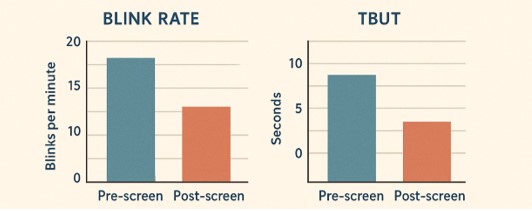
Figure 3: The blink rate (left) and TBUT (right) were greatly influenced by 2 hours of screen time-they reduced considerably and therefore increased signs of dry eye and fatigue
Assessment of macular health
Readings of Macular Pigment Optical Density (MPOD) though they were within the normal range for most participants, presented slightly reduced values among individuals with daily screen use that exceeded 8 hours. This does not speak to a diagnosis of macular degeneration but gives an early trend that is worrisome, especially in users who do not take any precautionary measures such as blue light filters or regular screen breaks.
Greater variability of MPOD in subjects above 55 years old makes age another compounding factor in retinal vulnerability. This finding is consistent with new understanding that extended exposure to high-energy visible light over time may increase oxidative stress onto the retina as below figure shows an average MPOD (Macular Pigment Optical Density) representation by age group. The trend is that the more the age group belongs to the 25-45 and 55+ categories, the more the levels were found to decrease with increased screen time.
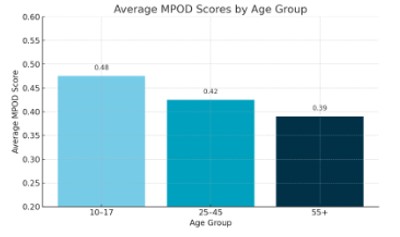
Figure 4: Macular pigment scores are seen to be reduced with increasing exposure time on the screen, predominantly for middle-aged and older adults
Sleep Disruption and Ocular Recovery
Screens at night Participants were willing to note that screens used at night made falling asleep difficult 42% and waking up with tired eyes in the morning 38%. This matches the physiological feedback where poor sleep seems to exacerbate visual strain the following day. The body's inability to fully recover from visual fatigue added by circadian disruption came out as a significant risk factor in the development of chronic eye strain.
Blue light filters participants and those who performed the 20-20-20 rule expressed less symptoms with lesser intensity. This speaks volumes about how important proactive behavioral adjustment is in the mitigation of cumulative effects brought about by screen-related stress.
Discussion
The results clearly show that digital eye strain is a multifactorial issue that blue light exposure aggravates. Though physically the intensity of blue light emitted from screens may be less than normal sunlight, its peculiar mode of harm makes it more damaging in indoor digital environments due to the long hours and close distance as well as unbroken exposure.
The experimental stage validated that short periods of screen engagement would lead to physiological changes, which could be measured concerning tear film quality and blink behavior. Such symptoms are further elicited by bad lighting conditions due to reduced blinking and continuous fixation on the screen.
No damage to the retina was observed, but it can be inferred that long hours of screen usage may induce long-term retinal stress since lower MPOD values were obtained in frequent screen users and elderly participants. Macular degeneration is recognized to take years to develop; therefore, results infer that bad screen habits could serve as initial precipitants for retinal cellular wear and oxidative stress.
The effects of disturbed sleep further compound the problem. Since blue light’s inhibition of melatonin might indirectly cause a deficiency in rest, that would allow for less time for the eyes to recover their ability to generate moisture and come into sharp focus. This data supports the concept that eye health is a function not only of what is seen but when and how it is seen.
Conclusion
This study will therefore take the liberty to precipitate that extended exposure to blue light on digital screens has a major contributor role towards symptoms of digital eye strain and if anything, it sets the stage for aggravated conditions such as macular degeneration. Regular screen users more particularly the working-age regular screen users are at the highest risk. This data hereby advocates, supports, champions, and cries out for the immediate institution of habits by all to manage screens, preventive strategies plus another longitudinal research study in an effort to understand and minimize long-term effects caused by blue light on vision.
Acknowledgements
We thank (e.g.: Mr. Hassan Bin Haroon, “Department of Human Resource Management Faculty of Management Sciences International Islamic University Islamabad”).
References