


Laboratory of Pharmacology and Toxicology, Department of Biochemistry, Faculty of Science, University of Yaounde 1, BP 812, Yaounde Cameroon
Food Safety and Fraud Division of the Integrated Health for All Foundation (IHAF), Cameroon
Agri-Food Safety and One Health Agency (AFS1HA), Cameroon
Received: 03 September, 2023; Processed: 18 September, 2023; Accepted: 25 September, 2023
Citation: Abia, Wilfred Angie. “Food Fraud Detection: The Role of Spectroscopy Coupled with Chemometrics.” J Nutr Diet Manage 1 (2023): 103. DOI: 10.59462/JNDM.1.1.103.
Copyright: © 2023 Abia WA. This is an open-access article distributed under the terms of the Creative Commons Attribution License, which permits unrestricted use, distribution, and reproduction in any medium, provided the original author and source are credited.
Food fraud is a concern for both consumers and business operators, but can simply be controlled by food industries ensuring compliance with food laws as a moral duty for authentic food quality and safety. Intentional tampering with food content at any stage of production, processing and trade, may have far reaching implication as it may constitute a risk to human, animal, plant and environmental health. Therefore, there is need for quality of a foods to be genuine and undisputed in its nature, origin, identity, and claims, and meet expected properties (i.e., authentic).
Ensuring food authenticity necessitates efficient and effective tracing and tracking of food products, particularly those with low production levels visà- vis demand, coupled with high nutritional, medicinal and or economic values. Detection of food fraud remains complex when considering the complex nature of foods. Besides discussing food fraud and related terminologies, this paper focuses on the combined spectroscopy and chemometrics approach for assessment of food authenticity Understanding of the nature of fraud, gathering the appropriate datasets, establishing global partnerships (where need be), predicting vulnerability, while employing food management systems, may facilitate management and or prevention of food fraud.
Viewing the complex nature of food, and then with intentional tampering with its nature, detecting fraud associated with any given food and or food product remains complex. Spectroscopy coupled with chemometrics, although sophisticated, have revealed a good fit for the job, and hand held tools such as Scio (consumer physics, which is used to scan foods in the IR range) have been made to surpass the challenge.
Food Fraud • Authenticity • Traceability • Spectroscopy • Chemometrics • Consumers’ health
Nowadays, we hardly know the source and quality of what we eat. For a while now, consumers’ attention on source and quality of food they consume has continue to gain grounds. Food is a major universal basic requirement for human beings, and “We are what we eat”. Some foodstuffs and or their products such as red palm oil, honey, fruit juice are rare (e.g. with low production quantities vis-à-vis high demands and thus high cost); have functional properties (such as medicinal values); and are fundamental in human life (i.e., have high usage frequencies) amongst others. As a consequence, and coupled with inadequate supplies to meet the ever increasing demands, some food industries/ producers, distributors, and or retailers have resolved to illegal means of meeting up the demands with sore aim of making profit, and in some cases, perhaps without their knowledge, ends up inducing harm to consumer health. Moreover, intentional tampering with food content at any stage of production, processing and or trade, may have far reaching implication as it may constitute a risk to human, animal, plant and environmental health.
Generally, there is no universally accepted definition for food fraud and related terminologies. Following an international survey, a set of definitions for food fraud and related terminologies were advanced [1,2]. Food fraud is generally being perceived and defined from using a several different words, all pointing to a single direction. Some of the most popular definitions for food fraud are presented on Table 1 below. Despite all, food fraud is still under represented in academic literature, and thus a need to revisit the scope of food fraud [3].
| Definition of food fraud | Reference |
|---|---|
| Food fraud ‘is a collective term used to encompass the deliberate and intentional substitution, addition, tampering, or misrepresentation of food, food ingredients, or food packaging; or false or misleading statements made about a product for economic gain’. | [26] |
| Food fraud “is deception of consumers using food products, ingredients and packaging for economic gain and includes substitution, unapproved enhancements, misbranding, counterfeiting, stolen goods or others.” | [25] |
| Food fraud ‘is the deliberate placing on the market, for financial gain, foods which are falsely described or otherwise intended to deceive the consumer’ |
[21] |
| Food fraud ‘is deception, using food for economic gain’ | [27] |
| Food Fraud is “any suspected intentional action by businesses or individuals for the purpose of deceiving purchasers and gaining undue advantage therefrom, in violation of the rules” – a shortened version of the definition in the European Union Article 1(2) of Regulation (EU) 2017/625 (Agri-food chain legislation). | [22-23] |
| “Food Fraud: Any actions taken by businesses or individuals that deceive other businesses and/or individuals in terms of misrepresenting food, food ingredients or food packaging that brings about a financial gain.” | [16] |
| Food fraud ‘is any deliberate action of businesses or individuals to deceive others in regards to the integrity of food to gain undue advantage.’ | [4] |
Table 1. Some common definition of food fraud, and agri-food fraud.
Therefore, food fraud is the deception of consumers through intentional adulteration of food e.g., by substituting one product for another; by using unapproved enhancements or additives; misrepresenting something (e.g., country of origin); by misbranding or counterfeiting; and or by stolen food shipments and/or intentional contamination with a variety of chemicals, biological agents or other substances harmful to private– or public–health. The process of food fraud is usually characterized by an action (generally deception using food, otherwise, to rob consumers’ wallets), a motivation (mainly for economic gain provoked by greed or gain), and there is always an effect (typically economic and consumers’ health vulnerability or threat). Food fraud is more likely to occur when there is an opportunity such as no control measures, weak internal control systems, and little fear of exposure and or likelihood of detection.
Several types of food fraud exist in the literature, and may be perpetrated alone or in combination. These include but not limited to: adulteration, substitution, dilution, tampering, simulation, counterfeiting, and misrepresentation (Table 2) [4].
| Type of food fraud | What it is |
|---|---|
| Substitution or adulteration | Replacing an ingredient, or part of the product, of high value with another ingredient, or part of the product of lower value. This may even occur during plant or animal growth, e.g., artificial feeding of bees during nectar flow. the fraudulent addition of non-authentic substances or removal or replacement of authentic substances without the purchaser's |
| Dilution | Mixing a liquid ingredient of high value with a liquid of lower value |
| Masking or Mislabeling | Placing false claim on packaging for economic gain (masking or mislabeling of geographic or botanical origins indicators). |
| Unapproved enhancement | Adding unknown and undeclared materials to food products to enhance the quality attributes. |
| Concealment | Hiding the low quality of food ingredients or product |
| Counterfeiting | Copying the brand name, packaging concept, recipe, processing method, etc. of food products for economic gain |
| Grey market production (overruns, theft or diversion) | Sale of excess unreported product |
Table 2. Types of food fraud.
In it vital to note that fraud may occur right at the level of plant growth. Thus, the EU Commission Regulation Article 1(2) of Regulation 2017/625 nicely extended scope of food fraud to control to cover the entire agri-food chain (including plant health, animal health, and feed) – insinuating a probable that agri-food fraud is a one health approach to protecting consumers health from food fraud. Therefore, in 2019, the agri-food fraud was defined as “a noncompliance concerning any suspected intentional action by businesses or individuals, for the purpose of deceiving purchasers and gaining undue advantage therefrom, in violation of the rules referred to in Article 1(2) of Regulation
(EU) 2017/625” (European Union Commission Regulation (EU) 2019/1715). Non-compliance or suspicious for fraud as per definition of agri-food fraud occurs when there is violation of EU rules (a), deception of customers (b), economic gain or undue advantage (c), and intention (d). Agri-food fraud (and food fraud) simply leaves the food product in the market at a non-compliance situation, therefore, such food is no longer consider to be authentic.
According to the CAC (Codex Alimentarius Committee) [4], food authenticity refers to the quality of a food to be genuine and undisputed in its nature, origin, identity, and claims, and to meet expected properties. Authentic or genuine food is when a food (and its contents) correspond to the original condition and the information on the label. Food authentication is a verification process to assure that foods and or food products are free from any prohibited components proscribed by Food laws within a specified context and is verified as complying with the description on its label. Food authentication represents an important issue for the food industry because consumers are becoming interested in the quality and origin of food such as organic, protected denomination of origin, protected geographical indication products. The globalization of food markets implies, has allowed for consumers to come into contact with a variety of different food types, a scenario that has made them more concerned about the quality and origin of their food. The higher prices of protected denomination of origin products is partly responsible for some of the counterfeiting products in the market nowadays. Altogether, food authentication is a major concern for the prevention of fraud, in addition to evaluate the safety of consuming food products that may be harmful for human health. In turns, food authenticity has necessitated the tracing and tracking of fraudulent products and perpetrators. This speculates the paramount importance of food authentication in food quality control and safety. Broadly speaking, food authenticity matters include: economic adulteration of high value foods; mis-description of the geographical origin; non-compliance with the established regulatory standards, and or the implementation of non-acceptable process practices. Therefore, there’s need for assessing the authenticity of foods by ensuring their compliance with food legislation and traceability requirements [5].
Food traceability involve tracking and tracing of food or food product or raw materials of a food product from the market back to its origin. In addition, tracing may also involve the production processes and persons involved [6]. Generally, defining the geographical origin of a food or food product is important for varied reasons e.g., in situations where high quality food materials or species are replaced or substituted by less valuable ones. Furthermore, food traceability is a key concept in the agrifood industry, especially for foods or food products with peculiar organoleptic characteristics that can be ascribed to a specific growing area or the know-how of local farmers. As a consequence, the verification of the origin of high valued food and or food products is of crucial interest [7]. Furthermore, tracing and tracking of foods are complex processes when considering the disparity in (bio)markers or (bio)measures, technical solutions and technologies involved in producing different foods (e.g., processed, semi-processed, or raw foods). For proper traceability, the importance of suitable biomarkers that are stable and traceable all along the food production/processing chain cannot be over emphasized. Therefore, traceability being the “ability to follow the movement of a feed or food through specified stage(s) of production, processing and distribution” is a vital tool for food authenticity [8,9].
Detecting presence or absence of harmful substances directly and secretly being induced in foods/food products with sore motive of profit making at the expense of consumers health remains an overwhelming task. Broadly speaking, food analysis is a field of utmost importance. At the same time, given its inherent complexity, this subject encompasses multiple aspects, e.g., safety of use, health requirements, compliance to laws, organoleptic characteristics, and consumers’ acceptance, each and or a combination of which gears towards consumers’ health protection. This is particularly so, when considering targeted analysis (investigating presence of known substances) such as spectrometry, as opposed to non-targeted analysis (investigating presence of unknown substances) such as spectroscopy coupled with chemometrics and or additional analytical tools [10,11]. This paper focuses on the how vibrational spectroscopy in conjunction with multivariate chemometric techniques (such as principal component analysis PCA, and partial lease square - discriminant analysis PLS-DA) is a breakthrough in solving/handling food analysis challenges, as it is important to check the presence/absence of harmful compounds in foodstuff to ensure law/sanitary compliance [10,12].
The quantification of specific and unknown compounds in foods and or food products may be of interest, as this can provide information on the quality, safety, authenticity, tracing, and or fraud associated with a food product. Generally, food matrices are complex systems, making the quantitation of substances, especially unknown substances, difficult. This is partly due to the presence of interferences other than the compounds of interest. Nevertheless, this problem is gradually being overcome by exploiting the combination of spectroscopy and chemometrics techniques.
When considering non-targeted analysis, spectroscopy is an appropriate tool as a large amount of data can be generated in a rapid and non-invasive manner. Spectroscopy is a versatile, relatively rapid, non-destructive, non-invasive technique used for the characterisation of chemical mixtures. Often, it requires minimum sample manipulation or pre-treatment, vis-à-vis other state-of-the-art methods, e.g. spectrometry [11]. Spectroscopy techniques possess unique analytical capabilities, particularly the development of a chemical “fingerprint” of a specific substance [13]. Notwithstanding, interpreting the data to form a clear and concise conclusion from such analysis is not always straight forward, partly due to the similarity of many spectral responses [14]. For example, the use of certain techniques, e.g. UV-VIS spectroscopy, can lead to spectral response overlaps with other components in the food or food product. This may mask or inhibit the detection of a substance (or adulterant) in the sample being tested. Therefore, there is need for additional techniques, e.g. chemometrics, to further analyze the spectra for more precise and accurate identification of specific components or adulterants in the food or food product being tested [14].
Chemometrics is generally considered as the application of multivariate statistics, mathematical modelling, computer sciences, and analytical chemistry in chemical data treatment [12]. It eases interpretation of spectra from spectroscopic analysis, and has emerged as effective tools for analytical purposes, either qualitative or quantitative [11]. Furthermore, chemometrics has been applied in developing calibration models which needs to be evaluated using an appropriate validation dataset before being employed for the analysis of unknown samples. Such classification models can be divided into unsupervised and supervised techniques [10,15]. Unsupervised chemometric techniques (e.g. principal component analysis, PCA) and the supervised chemometric techniques (e.g. partial least squares, PLS) are truly non-targeted chemometrics approaches [12]. These techniques have been employed to create clusters of spectra from a known authentic food product, based on chemical responses generated with analytical instruments. Such clusters have been employed as calibration models for unknown samples to be compared and characterized against. Generally, the interpretation of results is that, a test sample that falls outside the cluster becomes a suspect sample. Such suspect sample may undergo further evaluation using alternative analytical techniques [10].
By and large, non-targeted analysis seeks to answer questions such as “is this product authentic?” or “is the sample from a particular group, e.g. geographical origin, and or grade?” with a mind of detecting whether or not there is presence of discrepancies from the authentic product and or product’s geographic origin and or grade of the product. Non-targeted analysis does not seeking to quantify one particular adulterant [10]. A comprehensive analytical guide for exploiting spectroscopy coupled with chemometrics is presented below (Figure 1).
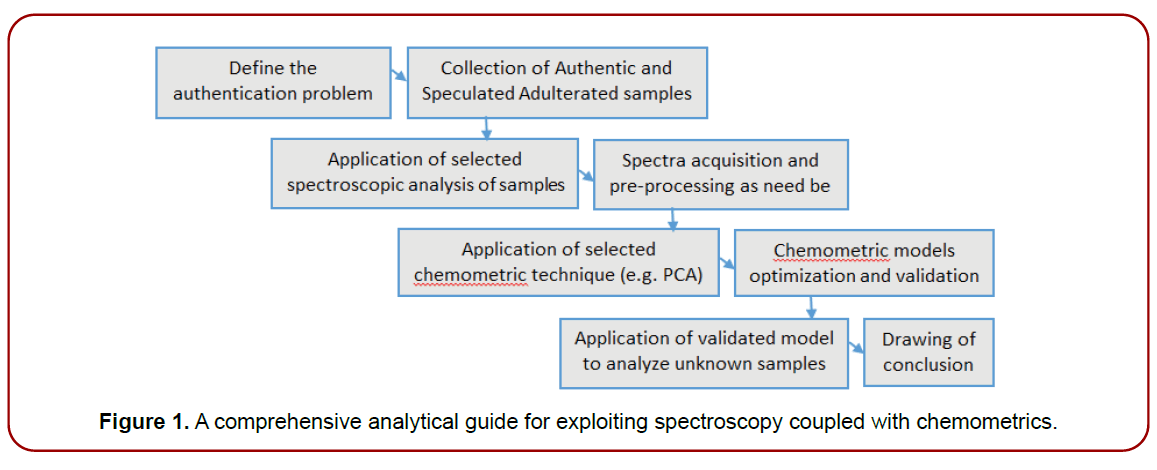
Figure 1. A comprehensive analytical guide for exploiting spectroscopy coupled with chemometrics.
Notwithstanding the potentials of combined spectroscopy and chemometrics in detecting fraud in foods, the nature of fraud (proper definition of the fraud), treating it more seriously and effectively, forging partnerships to beat global food fraud, and predicting vulnerable sectors (ie., likely occurrence of fraud more accurately) remain additional precautions to take to facilitate tackling of food fraud [16]. Additionally, identifying and collecting or gathering the appropriate data for food fraud prevention is critical [17]. Furthermore, food fraud may be avoided/prevented through efficient and effective food safety management systems (GFSI) which is now included as an expansion of food fraud scope [18-27].
Generally food fraud (and agri-food fraud) affects both consumers and businesses, although consumers’ health remains the focus. However, the intentional tampering with food content at any stage of production, processing and or trade, may have far reaching implication as it may constitute a risk to human, animal, plant and environmental health. Authenticity or ensuring compliance of food remains a vital part of every branding strategy and continuity, and if used properly, constitute a source of essential value creation to the industry. Viewing the complex nature of food, and then with intentional tampering with its nature, detecting fraud associated with any given food and or food product remains complex. Spectroscopy coupled with chemometrics, although sophisticated, have revealed a good fit for the job, and hand held tools such as Scio (consumer physics, which is used to scan foods in the IR range) have been made to surpass the challenge.
Ethics approval and consent to participate: Not applicable
Consent for publication: Not applicable
Availability of data and material: Not applicable
Competing interests: The author declare that there is no competing interests
Funding: Not applicable
Authors’ contributions: Wilfred Angie Abia proposed the idea, designed outline, provided initial write up and did final proofreading.
Acknowledgements: Not applicable