


Kimia Moiniafshari*, Farshad Kalantari, Hafez Behzadi Nezhad
Department of Physical Education and Sport Sciences, Faculty of Literature, Humanities and Social Sciences, Science and Research Branch, Islamic Azad University, Tehran, Iran
Received: 01 December, 2023; Accepted: 11 December, 2023; Published: 16 December, 2023
Citation: Moiniafshari, Kimia. “How Physical Activity Affects Alzheimer’s Patients Quality of Life.” J Neur Imag Neur Med (2023): 102. DOI: 10.59462/JNINM.1.1.102.
Copyright: © 2023 Moiniafshari K. This is an open-access article distributed under the terms of the Creative Commons Attribution License, which permits unrestricted use, distribution, and reproduction in any medium, provided the original author and source are credited.
Neurodegenerative disorders prevalence such as Alzheimer’s disease, has gained a growing trend within the past years which has become to a health concern. Aging, is one of the contributing causes for Alzheimer’s and it seems that physical activity, as a part of lifestyle, can slow down the aging process, improve cognitive function and delay the development of Alzheimer’s disease the results from previous studies have indicated that physical activity interventions, in both aerobic and resistance, can improve cognitive function, decrease beta amyloid plaques aggregation, increase the level of BDNF and IGF-1, as well as short- and long term memory improvement can be suggested that physical activity for longer period of time as a part of daily life, can bring beneficial health outcomes for individuals at risk of Alzheimer’s or diagnosed with Alzheimer’s disease
Neurodegenerative disease • Physical activity • Cognitive function • Gene expression
Physical activity and Alzheimer’s
By aging, several processes occur in the brain which make it more susceptible for injuries. These events can affect brain structure and function. These can be included the decrease in the blood flow to the brain, decrease in the brain size and cognitive function impairment. Aging can be considered as one of the causes for Alzheimer’s disease. These impairments usually are accompanied by the decrease in neural cells in the brain low physical activity and sedentary lifestyle, is another leading cause for Alzheimer’s [1].
Physical activity effect on cognitive function in Alzheimer’s
Physical activity is well known for its beneficial effect on brain health especially in individuals with older age and is assumed to improve cognitive function. This can be due to positive neuro-physiologic effects World health organization has suggested that individuals over 65 years can benefit from at least 150 minutes/week of aerobic activity such as walking with moderate intensity and 75 minutes/week activities with higher intensities or the combination with strength training for 2 or more days per week, which can improve health status among elderly at risk of Alzheimer’s [2].
Brain empowerment against Alzheimer’s
The beneficial mechanisms that physical activity can affect Alzheimer’s, is not well known and clear yetIt has been suggested that one of the possible mechanisms, is increase in the level of BDNF in the brain as a result of regular physical activity BDNF, is a factor which can help neural cells survival and improve neurogenesis which can prevent Alzheimer’s and improve cognitive function physical activity, can improve neurogenesis and brain function, along with new synapse creation and decrease in the plaque [3]. Moderate intensity physical activity can improve neurodegenerative disease along with other health benefits including decrease the risk of cardiovascular disease, metabolism improvement and decrease in inflammation. The improvement of physical fitness seems to be correlate with cognitive function, especially in elderly. Moreover, physical fitness improvement, may improve self- independency which can be more manifested in longer period of time by improving aerobic capacity, strength and flexibility [4].
Physical activity effect on Alzheimer’s biomarkers
Studies have suggested that physical activity can be even considered as a therapeutic intervention for Alzheimer’s regular physical activity, can increase angiogenesis, increase in BDNF level and decrease inflammation on the other hand, physical activity can decrease betaamyloid plaques aggregation and their clearance as well as preventing from cortex and hippocampus atrophy. The positive effect of physical activity on the brain can also be manifested in glucose metabolism efficacy in the brain [5].
Effect of physical activity on brain blood flow in Alzheimer’s
It seems that beta-amyloid plaques in Alzheimer’s, can affect the blood flow in the brain studies have suggested that the brain blood flow in Alzheimer’s patients is 40% lower in comparison with other individuals which can decrease cognitive function physical activity, especially in aerobic type, can increase brain blood flow and improve cognitive function, improve cardio-respiratory capacity which can have beneficial effect on cognitive function although the results from the previous studies have indicated inconsistent results in the effective duration which can bring the expected outcomes and it seems that the longer duration and the more regular physical activity, can improve Alzheimer’s condition more [6]. Moreover, physical activity can improve brain health by decrease inflammatory biomarkers in a dose dependent way [7].
Aerobic physical activity effect on Alzheimer’s
It has been suggested that light and rhythmic activities can increase grey matter in the elderly brain along with the increase in blood brain flow [8]. Aerobic activities especially while recruited for 16 weeks can reduce the atrophy rate in the brain and hippocampus along with decrease in inflammation [9]. Furthermore, aerobic activities, can improve synaptic function specifically in the hippocampus which has preventative effect on memory loss and improve functional and learning ability which can be related with neurogenesis and increase in neurotrophin and BDNF expression [10]. Not only while prescribed individually, but also when combined with resistance training, the level of BDNF will be improved and the inflammatory cytokines may be decreased which may lead to neural cognitive function improvement [11]. The possible effect of physical activity on neural plasticity may be more prevalent in hippocampus. The structural modification in hippocampus may lead to increase in IGF- 1 and BDNF along with angiogenesis which may improve oxygen delivery [12-14].
Resistance training effect on Alzheimer’s
Resistance training may improve balance, bone density, muscle mass and muscular power resistance training in elderly can improve memory, concentration and alertness as well as reaction time, programming and information processing. In neurodegenerative disorders, decrease in cognitive function is related with aging. As a result, it is suggested that individuals do resistance training in combination with aerobic training which may be due to the beneficial effects on atherosclerosis prevention and blood flow improvement which deliver more oxygen and nutrients to the brain. The possible mechanism which resistance training may affect Alzheimer’s can be manifested in the increase in IGF-1 which can pass through brain barrier and increase in BDNF [15-20].
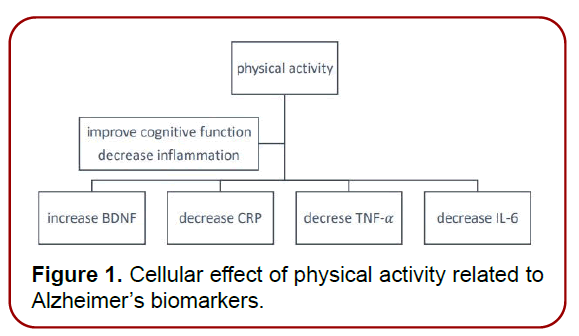
Figure 1. Cellular effect of physical activity related to Alzheimer’s biomarkers.
Neurodegenerative diseases including Alzheimer’s has gained an ascending trend. Epidemiological and experimental studies have suggested that physical activity can improve Alzheimer’s disease condition. The results for the effectiveness of physical activity in Alzheimer’s, is inconsistent, despite beneficial effects of both aerobic and neural plasticity, increase in IGF-1, BDNF and beta- amyloid plaques have been indicated which can improve cognitive function, memory, blood flow and decrease inflammation and improve in antioxidant capacity regular physical activity can be considered as lifestyle related intervention for neurodegenerative disease.