


Osagie Reuben Ogbe*, Oderinde, Michael Adekunle2, Ola Olusegun Oyedele3
1Department of Business Administration, Faculty of Management Sciences, Lagos State University, Ojo, Nigeria
2Department of Industrial Relations and Human Resource Management, Faculty of Management Sciences, Lagos State University, Ojo, Nigeria
3Department of Entrepreneurial Studies, College of Entrepreneurial & Development Studies, Federal University of Agriculture, Abeokuta - Nigeria
*Correspondence: Osagie Reuben Ogbe, Department of Business Administration, Faculty of Management Sciences, Lagos State University, Ojo, Nigeria. E-mail: reuben.osagie@lasu.edu.ng
Received date: 17 March, 2026; Accepted date: 24 March, 2026; Published date: 27 March, 2026
Citation: Osagie, R.O, Oderinde M.A., Ola, O.O. “Relationship Currency and Employees’ Commitment in the Hospitality Industry in Lagos State: Moderating Effect of Organizational Repositioning.” J Glob Entrep Manage (2026): 134. DOI: 10.59462/3068-174X.4.1.134
Copyright: © 2026 Osagie, R.O. This is an open-access article distributed under the terms of the Creative Commons Attribution License, which permits unrestricted use, distribution, and reproduction in any medium, provided the original author and source are credited.
This study attempts to conceptualize the relationship within the four-walls of an organization from the perspective of currency of exchange and how it impacts on employees’ commitment, hence the objective of the study is to examine relationship currency and employees’ commitment in the hospitality industry in Lagos State, a moderating effect of organisational repositioning. The study adopted a positivism philosophy, with a descriptive research design and a population of 1500 drawn from 30 selected 4-Star and 5-Star hotels in Lagos State. A sample size of 306 elements was derived using Cochran finite sample size determinant, adjusted to 400 elements to make up for 30% non-respondents. The study also adopted multi-sampling technique using simple ratio, as well as convenience sampling technique to allocate respondents. Questionnaire was adapted in a 6-point Likert scale rating. Pilot study was conducted on four hotels in Ogun State, with the results indicating validity and reliability of the research instrument. 400 copies of questionnaire were administered for the study, out of which 376 copies were retrieved and used for the study amounting to 94%. Six (6) Hypotheses were formulated and tested in null form, analysed using Structural Equation Model (SEM) and results obtained revealed that there is a positive significant effect of relationship currency on employees’ commitment (RC->EC 0.465, T-stat 5.679, p-value 0.00<0.05). It also revealed that organizational repositioning does have a positive significant effect of 0.13 on the association between relationship currency and employees’ commitment in the hospitality industry in Lagos State respectively, with a T-stat of 2.150, p-value of 0.032<0.05. It was therefore concluded that relationship currency has a strong positive effect on employees’ commitment, and that organizational repositioning has a moderating effect on the association between these variables. Therefore, it is recommended that organizations should create a climate and culture that permeate all the indices of relationship currency because of its reciprocity in achieving employees’ commitment, thereby leading the organization to achieve its strategic repositioning agenda.
Keywords: Employees’ Commitment; Hawthorne Studies; Organizational Repositioning; Reciprocity, Relationship Currency
Investing in interpersonal relationships formed by individuals within an organization's surroundings has turned relationships into a currency [1]. This is created when members of an organization spend time getting to know one another better, exchanging ideas, and working together on internal roles, task, jobs and other projects that are delegated to them by the organization's formal structure [2]. According to Adeoye [3], relationship currency offers members of the organization the chance to establish new relationships, both formal and informal, as well as credibility. According to Hosseini, [4], it facilitates the modeling of an organization's relationships with employers, employees, management, and the environment.
Relationship currency actually has its root in the Hawthorne studies which gave credence to optimum productivity of employees, when there is a string of interpersonal relationships factors that mitigate against other physical factors such as lightning, technical tools, e.t.c. [5]. The Hawthorne experiment proves that other physical factors hardly affect employee productivity when the working environment is permeated by good communication between management and employees (perceived organisational support), between and among employees (networking) giving a feeling of mutual respect (social exchange), making employees have a feelings of being part and parcel of the organisation (organisational identification), thus leading to increased productivity and positive effect on employees’ commitment [6].
Organisations face competition continuously, and need to strategically plan to overcome and achieve sustainable competitive advantage [7]. One of the techniques available for organisation in the modern era to achieving the desired sustainable competitive advantage is organisational repositioning [8]. For organisations to successfully implement and achieve their desired goals and objectives of organisational repositioning, such organisation needs to effectively and efficiently align all its resources, viz, employees, materials, money/capital, knowledge/information, technology and technical know-how [9].
Organisational repositioning is an important factor in bringing together market analysis, competitive analysis, and segment analysis in the internal business analysis of an organisation. It has been argued to help organisation do more than just reacting to market situations by granting organisations access to better competitive position that is sustainable in their operating environment [8]. The aim of organisational repositioning is to move an organisation from its present point and position to a greater position in the market. organisational repositioning is oftentimes deemed a costly exercise to embark on from an organisation’s financial perspective, as this may require adjustment to their brand, products, packages, logos, communication of vision but organisations must continue to adjust their positioning to suit consumers preferences. Organisational repositioning could be achieved through brand repositioning usually in the form of niche-oriented repositioning, image-oriented repositioning, up-market technology-oriented repositioning, and symbolism-oriented repositioning [8].
Aligning employees to the successful implementation of strategic repositioning of an organisation entail ensuring their commitments to the tenets and objectives of the choice of strategic repositioning as an option to attain sustainable competitive advantage [10]. Employees commitment is very vital to the success, survival, sustainability, efficiency, optimal performance and attainment of organisations set goals and objectives among which is sustainable competitive advantage. According to Ebikeseye and Dickson [11], employees' commitment cannot be taken for granted in today's business environment since it necessitates ongoing, trustworthy, and discreet efforts aimed at winning their support and trust. It involves developing a value system that guarantees workers execute at their best, most effectively, and efficiently in the creative process of work and job while recognizing their relevance and emphasizing the importance of their labor.
Maintaining efficiency and fostering a culture of dedication among employees are new challenges facing modern organizations [6,12]. For owners, managers, and leaders of organizations, it is now crucial that all employees are dedicated to and focused on the organization's aims and objectives [13]. Obtaining dedicated workers who are capable and eager to put up their best effort in the pursuit of the organization's goals has become a significant challenge for the majority of Nigerian businesses, and the hospitality sector is no exception. This is as a result of lack of interest in the job, unwillingness to accept responsibilities, social and societal welfare challenges (work-life balance), economic strength of wages and salaries among others [14].
The generality of opinion concerning organisational repositioning is that it is aimed at resetting organisations position due to past failures experienced [15-18]. Organisation repositioning is much more than that, it is a desired new position that an organisation intends to attain by “going a step better than previous success” [19]; reduce the level of competition [20]; and achieve industry growth. Employees’ commitment to an organisation’s value is majorly a function of the relationship that exist between the organisation and its employees, the relationship between and among the employees, either formally or informally but this has not always been the case due to financial stability driving the interest of both organization and members of organizations, employees inclusive [3].
From a conceptual standpoint, Harris [2] contended that relationship currency originates from individuals within an organization spending time together, getting to know one another, exchanging ideas, and cooperating in teams or tasks assigned by the organization. It facilitates the development of networks of people within an organization, creating a large pool of individuals with a shared vision whose connections and credibility help define the organization's future. Relationship currency is defined by Harris [1] from the perspective of organizational identification, in which workers identify as belonging to an organization. According to this notion, employees' sense of unity and belonging to the organization they work for is crucial. Additionally, as members of the organization with shared ideologies, employees identify with the organization. As a result, the organization's ideology, mission, fundamental values, strategies, structure, and customary operational procedures become the standard [21].
Relationship currency has not received much attention, according to research. The currency generated by people's investments in their interpersonal connections at work is known as relationship currency [1,2]. It gives members of the organization the chance to build new connections and credibility. Employer-employee, management-employee, employee-employee, and management-environment interactions can all be modeled with the use of relationship currency. Additionally, it influences connections both within and between individuals within an organization. Relationship currency demonstrates the capacity to organize, inspire, control, and influence others [2]. Organizational commitment could be advanced through the utilization of effective interpersonal interactions in work groups. According to Adeoye [3,4], relationship currency gives members of the organization the chance to establish new official and informal contacts as well as credibility.
It is impossible to overstate how important the human resources/employees are to achieving the organization's goals and objectives. Employee commitment to the organization's goals and objectives is necessary to get them to produce at their best, most effective, and efficient level [3]. Developing human vitality and stimulating the human mind are components of commitment. It is a force that compels a person to follow a path relevant to one or more goals [22]. According to Ali [23], commitment is the psychological immersion of an individual with their organization through a sense of belonging, ownership of organizational goals, and willingness to take on obstacles. Committed employees are able to perform their jobs more than management expectations.
According to Al-Jabari and Ghazzawi [24], an employee's commitment is an emotional state that represents their affiliation with the organization and influences their decision to stay a member. In a similar vein, employees' commitment was seen by Meyer and Herscovitch [25,26] as an energy that binds a person to a goal (social or non-social target) and a course of action that is important to that goal [27]. Workers' dedication is demonstrated by their strong bond with the company and their role in achieving its aims and objectives. It is considered to symbolize the worker's capacity to contribute their values to the goals of the company. According to Prabhu [28], employees' willingness to contribute their "vitality and reliability" to social frameworks, the relationship between identity frameworks and social ties that are perceived as self-expressive, is a sign of their dedication. Additionally, Anwar and Qadir [29] defined employee commitment as the behavior that links workers to the company, their relationship with the company, and their support within the company [28].
H01: Examine the effect of relationship currency on employees’ commitment in the hospitality industry in Lagos State, Nigeria.
Organizational Repositioning is a deliberate action that an organization chooses to perform in order to carefully adjust to the constantly shifting business environment [30]. Organizational Repositioning, according to Ren [31], is the process of matching the current and future organization, product, or service with the current or future market conditions. Resetting a position is a concerted action designed to change the company's current position [15]. Additionally, Pansari and Kumar [32] define Organizational Repositioning as the process of launching the company's products into the market in order to gain a distinct and significant prominence in the minds of the target customers. The process by which a business adopts a strategic market position for a product or service to improve the firm's performance and unique advantage is also known as Organizational Repositioning. It is designed to boost the company's operations by giving it more responsibility [33]. Bledow [34] state that Organizational Repositioning is done to improve the product or service's future prospects as well as in response to a position that has failed.
Seamans and Zhu's [35] method of operationalizing Organizational Repositioning through brand repositioning was adopted in this study since it was thought to have a broader scope and applicability in almost all business sectors. An approach for building and preserving a company's reputation across its many stakeholders is brand repositioning. Because it can improve the company's image and boost customer confidence, brand repositioning is crucial. Corporate brand repositioning initiatives are intended to change a company's perceived image or brand identity, according to Muzellec and Lambkin [36]. In order to enhance business performance, the focus is on initiatives that set the organization apart through its name and visibility [34]. When starting a repositioning process, a comprehensive approach to brand repositioning is crucial since it allows the company's operations to be in line with its vision and goal. Additionally, it serves as the basis for the expression of core competencies [15], offering a chance to boost the company's future revenue.
While Organizational Repositioning can also be an outcome or output of an organization's action or strategy [19], the great majority of studies also see it as a tool or strategy for achieving an outcome (independent variable) and are accountable for the cause-and-effect relationship of another variable [20,30,37,38]. The use of Organizational Repositioning as a moderating variable on the cause-and-effect linkages between other factors of interest to researchers in the hospitality sector is also rare in the body of existing literature [39,40].
H02: Evaluate the moderating effect of Organizational Repositioning on the association between relationship currency and employees’ commitment in the hospitality industry in Lagos State, Nigeria
This study is based on Blau's [41] Social Exchange Theory (SET), which describes people's voluntary and non-mandatory acts in a relational setting with the expectation of future rewards. The type and extent of each party's involvement in the exchange relationship are "left to the discretion of the one who makes it" in social exchange [41]. According to Cole [42], referenced in Varey [43], "each participant in the social exchange process offers others certain currencies, benefits, or outcomes." According to Blau [44], the social exchange process is crucial to social life, highlighting the connections between both people and communities. The strategic significance of relationships (both formal and informal) in the workplace in achieving employees' commitment to organizations and how Organizational Repositioning acts as a moderator in actualizing this objective are the fundamental issues in this study; therefore, social exchange is the most appropriate theory for this study. The significance of the exchange interactions between employers and employees, as well as between and among employees, and how these have benefited all parties involved in the exchange relationship within the social environment, are further explained by the social exchange theory.
In their review of the social exchange theory, Davlembayeva and Alamanos [45] concluded that social exchange explains four key components of people's social behavior. First, the framework outlines the resources of exchange and rewards/benefits that support the person's incentive to participate in the interaction [44]. They contended that the second component relates to the mechanisms of exchange, which are based on the subjective cost-reward analysis and are determined by two (2) primary criteria: (i) the extent to which an individual or others have previously received a reward for a comparable performance; and (ii) the extent to which the outcome of the exchange is valuable to the individual [44,46]. The third component is that social institutions and social capital elements-such as conventions, regulations, communication routes, expectations, and obligations-stimulate social exchange interactions. Reciprocity, which establishes obligations between the parties in the social exchange connection, is the fourth mechanism supporting social exchange [47,48].
Though extant literature is scarce with empirical evidence on the moderating effect of organisational repositioning on the effect of relationship currency and employees’ commitment, much of the findings on organisational repositioning are on the constructs for measuring the variables of interest.
Organizational identification was one of the independent variable constructs used by Adeoye [3] in their study of relationship currency and commitment measurements in higher education institutions in Lagos State, Nigeria. The study population was selected from both academic and non-academic staff members of the participating state-owned higher education institutions in Lagos State using a cross-sectional research design. Using the Cochran infinite sample size determination, a sample size of 329 respondents was selected from the population. Their study used the structural equation model on SMARTPLS version 3.3.9 to analyze data and discovered that, among the specific objectives hypothesized, organizational identification has a significant effect on affective commitment. They suggested that management in higher institutions should create an environment that encourages social relationships among employees across departments and units, as this will increase the levels of organizational identification and influence organizational commitment.
In order to maximize organizational success, Mmutle [39] investigated repositioning and acknowledging the impact of internal communication on employee engagement. A study sample of 33% of employees from different departments participated in semi-structured interviews at the LG Electronics headquarters in Seoul, South Korea, as part of a qualitative research approach. Thematic analysis was also used to make recommendations. The study discovered that internal communication and employee collaboration were important factors in determining the organization's engagement effort towards repositioning, and that organizational engagement resulting from a strong management philosophy as part of the internal communication strategy empowered employees to perform beyond prescribed expectations.
Chou [49] used a survey research design approach to investigate the relationship between social exchange and employee attitudes toward recently introduced information systems, as well as the mediating role of affective commitment. A total of 600 questionnaires were distributed to three (3) companies in Hsinchu County, Taiwan, of which 334 were returned valid and useable. The study, which used SEM on AMOS software, discovered that social exchange significantly influences employees' attitudes and that there is a significant relationship between leader-member exchange (LMX) and perceived organizational support. These exchanges ultimately have a significant impact on the organization's brand repositioning.
This study used a positivist paradigm based on scientific methods to postulate crucial steps for obtaining data that may be utilized to formulate research hypotheses. Creswell [50] claims that positivism serves as the foundation for a number of organizational initiatives, including repositioning strategy and psychometric testing for selection. Olayo [51] supports the idea that workers' dedication is linked to social exchange. In the context of employees' commitment, positivism was taken into consideration to establish the connection between hypotheses and the variables under investigation.
The research design used in the study was both explanatory and descriptive. In order to characterize the occurrence of a phenomenon and the link between the variables, descriptive research aims to ascertain the relationship between variables at a given period. In order to arrive at objective conclusions, the gathered descriptive data is further subjected to statistical analysis for hypothesis testing [52]. In keeping with the overall goal of the study, which was to gather data and precisely characterize the relationship between currency and employees' commitment in the hospitality industry, with a focus on the lodging and accommodation sector of the hospitality industry in Lagos State using Organizational Repositioning as a moderator, the descriptive research design was chosen [53].
The complete workforce of all four-star and five-star hotels in Lagos State, Nigeria's three senatorial districts-Lagos West, Lagos East, and Lagos Central-makes up the study's population. Hotels in Lagos State were selected due to the state's current status as Nigeria's commercial hub, as well as the fact that Lagos State is a megacity and a popular entrance point for foreign visitors to Nigeria [54]. In order to enable generalization of opinion based on the findings, all four and five-star hotels in the three (3) senatorial districts were chosen. There are currently 119 4-Star and 5-Star hotels in Lagos State, with 80 4-Star hotels and 39 5-Star hotels. The rationale behind selecting all of these hotels' staff members is to enable the researcher to draw well-informed conclusions and inferences by combining the opinions of employees from various departments, units, and roles. Because the study's target population is thought to be limited, the researcher will select 50 employees from 30 hotels throughout all senatorial districts, for a total of 1,500 employees from the chosen hotels. The contribution of both 4-star and 5-star hotels was derived using the ratio to which each category of hotel add up to the 119 hotels in Lagos State.
The sample size for this study represents a proportion of the population of this study from which inferences concerning the main population can be drawn [55]. Due to time constraints, cost and other limiting factors that make it totally impossible to reach the entire population of the study, a sample size will be derived using Cochran’s (1977) formular for finite population below:
NZ2pq
d2(N-1) + Z2pq
where:
N=the total population of the study (1,500)
Z=confidence level (1.96)
P=probability of success (0.5)
q=probability of failure (1-p)=(0.5)
d=precision level or error limit (0.05)
1500 * (1.96)2*(0.5)(0.5)
(0.05)2 * (1500-1) + (1.96)2*(0.5)(0.5)
n=1440.6
4.7079
n=305.99
n ≈ 306
However, to compensate for non-response by some respondents while also achieving the desired level of confidence and precision, Bujang, [56] opines that adding 20-30% of the derived sample size to the sample size will make up for anticipated errors that might occur due to non-response. Therefore, 30% of the sample size of 306 amounting to 93 will added making up the adjusted sample size of this study to be 399. This adjusted sample size now represents the sample size for the target population of this study that will serve as respondents from which inferences are drawn. This study adopts a multiphase sampling technique, utilizing probability sampling technique in form of ratio and simple random sampling technique while also utilizing convenience sampling technique which is non-probabilistic in nature.
The questionnaire developed for this study is divided into two (2) sections. Section A comprises the demographic, bio-data items, where questions ranging from gender, age, educational qualification, section in the organisation (academic or non-academic), marital status will be asked. Section B comprises questions adapted and crafted in a 6-Point Likert-type scale rating, from strongly agree (6), agree (5), partially agree (4), partially disagree (3), disagree (2), and strongly disagree (1).
Based on the two (2) hypotheses formulated for this study, the structural equation model (SEM) using SMART PLS 3.29 was conducted to test for the effect of relationship currency on employees’ commitment in the hospitality industry and the moderating effect of Organizational Repositioning on the association between the IV and the DV. The path diagram and the result obtained are as presented in the figure below.
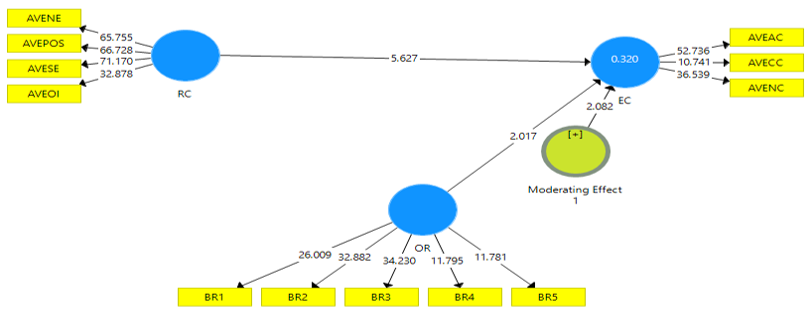
Figure 1. Path Diagram for Hypotheses 1 & 2
Source: Researcher Result, 2025
|
Original Sample (O) |
Sample Mean (M) |
Standard Deviation (STDEV) |
T Statistics (|O/STDEV|) |
P Values |
|
|
Moderating Effect 1 -> EC |
0.13 |
0.145 |
0.061 |
2.15 |
0.032 |
|
OR -> EC |
0.199 |
0.218 |
0.099 |
2.006 |
0.045 |
|
RC -> EC |
0.471 |
0.465 |
0.083 |
5.679 |
0 |
Table 1. Output Result for Hypotheses 1 & 2
Source: Researcher Computation, 2025
The output result of the hypotheses tested, generated from structural equation model using SMARTPLS 3.29 as seen in the path diagram in (Figure 1) and (Table 1) above reveals that Relationship Currency (RC) has a coefficient estimate (CE) of 0.471, with a mean value of 0.465, a standard deviation of 0.083, a T-stat of 5.679 with a p-value of 0.000<0.05 on Employees’ Commitment (EC). Organizational Repositioning (OR) has a CE of 0.199, with a mean of 0.218, a SD of 0.099, a T-stat of 2.006 and a p-value of 0.045<0.05 on EC. The moderating effect of OR on the association of RC on EC reveals a CE of 0.130, with a mean of 0.145, a SD of 0.061, a T-stat of 2.150 and a p-value 0.032<0.05.
The implication of the above on hypothesis 1 is that relationship currency accounts for 0.471 of the variation in employees’ commitment in the hospitality industry in Lagos State, and as such has a 47.1% effect on employees’ commitment, with other variables outside the model accounting for the remaining 52.9%. The mean and standard deviation of 0.465 and 0.083 indicates that overall, employees have a moderate level of commitment to the organization as a result of the level of relationship currency at play. The T-stat of 5.679 indicates the weight values with the presiding SE value above zero with a corresponding p-value 0.000<0.05 moving away from the null hypothesis. Hence, hypothesis one (1) is rejected. This finding is synonymous with the findings of Adeoye, [3] where they asserted that relationship currency has a statistically significant effect on commitment of employees of higher educational institutions in Nigeria.
Hypothesis two (2), which tested for the moderating effect of Organizational Repositioning (OR) on the association between relationship currency (RC) and employees’ commitment (EC) in the hospitality industry in Lagos State. The output revealed the effect of OR on EC as statistically significant with a coefficient estimate (CE) of 0.199, a T-stat of 2.006 and a p-value of 0.045<0.05. The moderating effect revealed a CE of 0.130 indicating that OR has a 13.0% moderating effect on the association between RC and EC I the hospitality industry in Lagos State, with a T-stat of 2.150 and a corresponding p-value of 0.032<0.05 revealing a significant deviation from the null hypothesis. Hence, hypothesis two (2) is rejected and it can therefore be asserted that Organizational Repositioning, which is a strategic objective, has a moderating effect on the association between relationship currency and employees’ commitment in the hospitality industry in Lagos State. This finding is relatively new in extant literature because of the novelty of the independent variable (Relationship Currency) and the utilization of Organizational Repositioning as a moderating variable on the IV and the DV. Though, Adeoye, [3] did a study on relationship currency and employees’ commitment in higher educational institutions in Nigeria, the choice of Organizational Repositioning as a moderator and the scope (hospitality industry) which is a thriving industry in the Tourism sector makes these findings unique.
From the foregoing, it can therefore be concluded that relationship as a currency of exchange is fundamental to attaining employees’ commitment in the hospitality industry, because as interpersonal relationships is allowed to thrive, either between and among employees, or between employers and employees, management ad employees, their commitment level to the organization continues to improve. It can also be concluded Organizational Repositioning, which is a strategy through which organizations out-manoeuvre their competitors while remaining relevant in the business landscape through repositioning their brand image, also moderates the association between relationship currency and employees’ commitment, by controlling the degree of association that exist between these variables of interest.
It was therefore recommended, based on the conclusions above, that employers and management of organizations should ensure a climate that permeates good and smooth interpersonal relationship between and among all parties in the organization, as this will foster a situation where members feel an affiliation to the organization, thereby improving their level of commitment to the organization. It was also recommended that organizations should ensure that strategies such as Organizational Repositioning, should always consider the importance of the human element in the organization towards actualizing them through their commitment level, which can be easily measured by the level of interpersonal relationships they enjoy.
This study contributes to the frontiers of knowledge on interpersonal relationship as a currency of exchange within an organisation, as its effect on achieving employees’ commitment in the hospitality industry where empirical literatures are relatively scarce as it sought to measure the effect of relationship currency on employees’ commitment, using organisational repositioning as a moderating variable on the association between the two variables of interest, utilizing validated measures in international context. The work provides evidence for these effects and reveals that there is a positive statistical significance in which empirical literature can draw from it.
This study also robustly increase extant literature through the conceptual framework model which helps to illustrate the hypothetical connection between relationship currency (which is a relatively new concept in management sciences independent variable construct) and employees’ commitment (the dependent variable construct) utilizing the various measurement dimensions brought forward, while also explaining the effect of the measurement constructs of the IV on the measurement constructs of the DV. It also buttresses the importance of the moderating variable, organisational repositioning, which is centered, on bolstering and improving the association between the relationship currency as the independent variable and employees’ commitment as the dependent variable.