


Mary Anbarasi Johnson*
Department of Nursing, Professor and Head, Paediatrics, College of Nursing, CMC Vellore, India
Received: 03 December, 2023; Accepted: 18 December, 2023; Published: 26 December, 2023
Citation: Mary Anbarasi. “Seizures in Children-Nurses Role in Alerting Parents.” J Neur Imag Neur Med (2023): 104. DOI: 10.59462/JNINM.1.1.104.
Copyright: ©2023 Johnson MA. This is an open-access article distributed under the terms of the Creative Commons Attribution License, which permits unrestricted use, distribution, and reproduction in any medium, provided the original author and source are credited.
Abstract
Seizures in children can be a cause for concern and can be distressing for parents. Parents need to be aware of the signs and symptoms of seizures, understand the potential causes, and know how to respond appropriately. Here’s some information with references to guide parents in understanding seizures in children.
Seizures in children represent a complex and challenging medical condition that significantly impacts the lives of both the affected child and their family. A seizure is an abnormal and sudden surge of electrical activity in the brain, leading to various physical and/or behavioral manifestations. Children may experience different types of seizures, each with its own set of characteristics and potential triggers.
Background: The prevalence of seizures in children alerts the parents to take it as a prime concern. Seizures in children are relatively common, with an estimated 3-5% of children experiencing at least one seizure during their childhood. Some children may have seizures associated with fevers (febrile seizures), while others may develop epilepsy, a chronic condition characterized by recurrent seizures. In summary, seizures in children are a multifaceted medical phenomenon with diverse causes and manifestations. Effective management requires a holistic approach, involving medical professionals, families, and support networks to enhance the well-being and quality of life for children living with seizures. Ongoing research and advancements in pediatric neurology continue to shape our understanding and treatment of this complex condition.
The emergency department generally is the place where children affected by seizures receive first treatment and medical support. Proper skills of physicians are essential for early diagnosis, treatment, and adequate communication with the parents. Seizures are defined as a transient occurrence of signs and symptoms due to abnormal, excessive, or synchronous neuronal activity in the brain characterized by abrupt and involuntary skeletal muscle activity. The adjective “transient” in the definition, indicates a time frame with a clear onset and remission [1]. Status epilepticus (SE) is a condition resulting either from the failure of the mechanisms responsible for seizure termination or from the initiation of a mechanism, which leads to abnormally, prolonged seizures (for some time of 5 min or more).
It is a condition, which can have long-term consequences (especially if its duration is more than 30 min) including neuronal death, neuronal injury, and alteration of neuronal network, depending on the type and duration of seizures. Febrile seizures are defined as critical seizures that occur in children aged between 1 month and 6 years with temperature rise over 38 °C and without signs of infectious disease of the central nervous system (CNS) [1]. In 2014 the International League against Epilepsy (ILAE) Task Force proposed the operational (practical) clinical definition of epilepsy, intended as a disease of the brain defined by any of the following conditions.
At least two unprovoked (or reflex) seizures occurring >24 h apart, one unprovoked (or reflex) seizure and a probability of further seizures similar to the general recurrence risk (at least 60%) after two unprovoked seizures, occurring over the next 10 years.
Diagnosis of an epilepsy syndrome
Epilepsy is considered to be resolved for individuals who had an age-dependent epilepsy syndrome but are now past the applicable age or those who have remained seizure- free for the last 10 years, with no seizure medicines for the last 5 years [1]. The incidence of epilepsy varies between industrialized countries and developing ones. In Western countries, new cases per year are estimated to be 33.3– 82/100,000, [1] in contrast to the maximum incidence of 187/100,000 estimated in developing countries [1]. In particular, recent studies showed that the maximum incidence occurs in the first year of age with a rate of 102/100,000 cases per year, just like the age range from 1 to 12; in children from 11 to 17 years old incidence is 21– 24/100,000 cases. Previous studies suggest that the total incidence of epilepsy is constant from 25 years, showing a slight increase in males [1].
In Italy, epilepsy incidence is 48.35/100,000 new cases per year and it is comparable with data recorded in the other industrialized countries. The peak of incidence occurs in children younger than 15 years old (50.14/100,000 new cases per year) and especially in the first year of life with an incidence of 92.8/100,000 new cases per year. In this regard, it should be taken into due account that the child’s immature CNS is more susceptible to seizures and at the same time refractory to the consequences of an acute attack. Finally, incidence is higher in males than in females [2-4].
Age of onset: Seizures can manifest at any age, from infancy through adolescence. Febrile seizures are more prevalent in young children, often occurring between the ages of six months and five years. Epilepsy, on the other hand, may have its onset at various stages of childhood.
Types of seizures: There are different types of seizures, broadly categorized into focal (partial) and generalized seizures. Focal seizures originate in a specific area of the brain, while generalized seizures involve the entire brain. The manifestation of seizures can vary widely, including convulsions, staring spells, or subtle behavioral changes. Seizures Associated with fever, are common in young children. Epileptic seizures are caused by abnormal electrical activity in the brain.
Causes and triggers: Fevers and Infections: Common triggers for febrile seizures. Genetic Factors: Some children may be predisposed to seizures. Seizures in children can be provoked by various factors, such as fevers, infections, genetic predisposition, structural brain abnormalities, or metabolic imbalances. Understanding the underlying cause is crucial for effective management and treatment.
Signs and symptoms
• Convulsions: Uncontrolled shaking or jerking
• Staring Spells: Sudden episodes of staring without
• Loss of Consciousness: Brief periods where the child is unresponsive.
• Strange Sensations or Auras: Some children may experience unusual feelings or sensations before a
Impact on development: Seizures can impact a child’s cognitive, emotional, and social development. Depending on the frequency and severity of seizures, children may face challenges in academic performance, social interactions, and daily activities.
Diagnostic process: Diagnosis often involves a comprehensive evaluation, including a detailed medical history, neurological examinations, imaging studies (such as MRI or CT scans), and electroencephalograms (EEGs) to monitor electrical activity in the brain.
Treatment approaches: Management of seizures in children typically includes pharmacological interventions with antiepileptic medications. Additionally, lifestyle modifications, such as ensuring adequate sleep, managing stress, and avoiding triggers, play a crucial role in seizure control.
Family impact: Seizures not only affect the child but also have a significant emotional and practical impact on the entire family. Parents and caregivers may experience anxiety, uncertainty, and the need for ongoing support in managing their child’s condition.
Response and First Aid: (Figure 1)
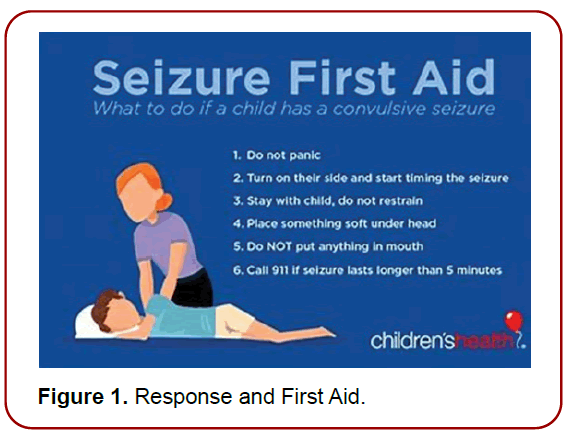
Figure 1. Response and First Aid.
Maintain safety: Move objects away to prevent injury, cushion the head, and turn the child to the side [5].
Time of the seizure: Note the duration, as prolonged
seizures may require emergency medical attention [6].
Medical Evaluation
Visit a healthcare provider: Seek medical evaluation
after the first seizure for diagnosis and management [7].
Medication compliance: If prescribed, ensure proper administration of antiepileptic medications [8].
Medical Management
Antiepileptic Drugs (AEDs): The primary treatment for seizures involves the use of AEDs. The choice of medication depends on the type of seizure and the child’s age. Common AEDs include valproic acid, carbamazepine, lamotrigine, and levetiracetam.
Monitoring and Adjusting Medications: Regular monitoring of drug levels and adjustments of medication doses may be necessary to achieve optimal seizure control [9].
Lifestyle Modifications
Sleep hygiene: Ensure the child gets adequate and regular sleep, as lack of sleep can trigger seizures in some cases [10].
Nutrition: Maintaining a balanced diet and adequate hydration is essential. In some cases, a ketogenic diet may be recommended.
Seizure diaries and monitoring: Keeping a detailed seizure diary can help healthcare providers track patterns and assess the effectiveness of treatment. Regular follow-up visits with a neurologist or epilepsy specialist for monitoring and adjustments [11].
Education and Support: Providing education and support to the child and their family is crucial for effective management. This includes understanding the condition, recognizing triggers, and knowing how to respond during seizures [12].
Surgical Intervention: In some cases, when medications are not effective, surgical options such as epilepsy surgery may be considered. Always consult with a healthcare professional to determine the most appropriate course of action for a specific child with seizures, as individual cases can vary widely [13].
Nurses play a critical role in the care and management of children with seizures. Their responsibilities encompass various aspects, including assessment, intervention, education, and support for both the child and their family. Here are key nursing responsibilities related to seizures in children (Figure 2).
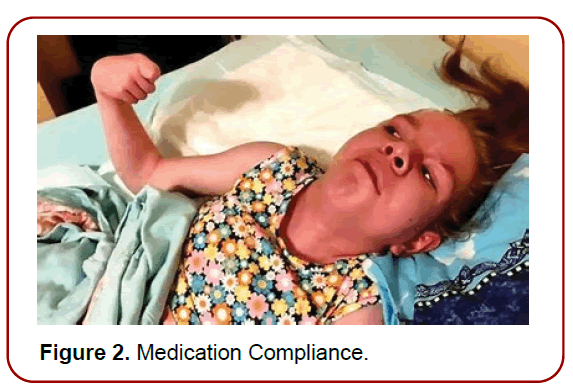
Figure 2. Medication Compliance.
Assessment:
• Seizure Type and Frequency
• Differentiate between seizure types (e.g., generalized, focal).
• Document the frequency and duration of
• Precipitating Factors
• Identify triggers such as fevers, infections, or lack of
• Medical History
• Review the child’s medical history for underlying conditions or genetic factors.
• Emergency Response
• Seizure Management
• Administer emergency care during a seizure, ensuring safety and protecting the child from injury.
• Follow institutional protocols for seizure
Medication administration
• Administer prescribed antiepileptic medications promptly and accurately.
• Monitor for medication side effects and adverse reactions.
• Education
Seizure action plan: Collaborate with healthcare providers to develop a seizure action plan for the child, outlining steps to be taken during seizures.
Monitoring and Documentation:
Seizure monitoring: Regularly assess and document seizure activity, including type, duration, and any associated symptoms.
Medication monitoring: Monitor serum drug levels as prescribed and assess for therapeutic effectiveness.
Adverse effects: Monitor for and report any adverse effects of antiepileptic medications.
Interdisciplinary communication: Collaborate with the healthcare team, including neurologists, pediatricians, and other specialists, to ensure comprehensive care.
Family support: Provide emotional support to the child and family, addressing concerns and answering questions.
Family education: Educate parents and caregivers about the nature of seizures, potential triggers, and the importance of medication adherence. Guide first aid measures during a seizure.
Seizure precautions: Implement seizure precautions in the healthcare setting to minimize the risk of injury during seizures.
Routine assessments: Conduct routine assessments of the child’s neurological status and overall well-being.
Advocacy: Advocate for educational accommodations and support for children with seizures in school settings.
Community resources: Connect families with community resources and support groups for additional assistance.
Professional development: Keep up-to-date with current research and best practices in pediatric epilepsy care.
Training and simulation: Participate in training and simulation exercises to enhance skills in managing seizures and emergencies.
Documentation: Maintain thorough and accurate documentation of assessments, interventions, and the child’s response to care.
Understanding seizures, their causes, and appropriate responses is crucial for parents. Regular medical follow- ups, adherence to prescribed medications, and emotional support contribute to better outcomes for children with seizures. It’s important to consult with healthcare professionals for personalized advice and guidance tailored to each child’s specific situation. Nurses play a pivotal role in the care of children with seizures, providing holistic and family-centered care. Their responsibilities extend beyond immediate seizure management to encompass education, support, and collaboration with the healthcare team to optimize outcomes for children with epilepsy. Regular communication and a partnership approach with the child’s family are crucial elements of effective nursing care in this context.