


Ryan Kanungo1*, Dr. Sanjana Das2, Dr. Kusum A Punjabi3, Gloria Bachmann4, Dr.Ranjita Sengupta5
1WHI-Research Intern, Rutgers-Robert Wood Johnson Medical School
2Dept of Ob/Gyn-PGY-1, Capital Health Consortium
3Dept Of Emergency Medicine, Rutgers Robert Wood Johnson Medical School
4MD, MMS, Rutgers Robert Wood Johnson Medical School
5MD, FACC, Rutgers Robert Wood Johnson Medical School
*Correspondence: Ryan Kanungo, WHI-Research Intern, Rutgers-Robert Wood Johnson Medical School, 125 Paterson Street, New Brunswick, NJ 08901, E-mail: ryan1.kanungo@gmail.com
Received date: 26 Dec, 2025; Accepted date: 12 Jan, 2026; Published date: 22 Jan, 2026
Citation: Ryan Kanungo, Dr. Sanjana D, and Dr. Kusum AP et al. “The Benefits of Dance for Menopausal Women.” J Gynecol Matern Health (2026): 125. DOI: 10.59462/3068-3696.4.1.125
Copyright: © 2026 Ryan Kanungo. This is an open-access article distributed under the terms of the Creative Commons Attribution License, which permits unrestricted use, distribution, and reproduction in any medium, provided the original author and source are credited
Background: Menopause is the phase in a woman's life during which she transitions into her post reproductive years. Due to declining estrogen levels, postmenopausal women may experience adverse psychological, physical and social changes. Data note that there are alterations in other hormones as well, including decreasing oxytocin levels, which also can have an adverse effect on the woman’s wellness. Although decreased oxytocin levels may have significant adverse effects on menopausal women, data suggest that it can be stimulated with specific activities like hugging, cuddling and, dancing.
Hypothesis: Dancing by menopausal women may be an exercise that indirectly helps the release of oxytocin and thereby promotes social and mental wellbeing. There also are data that is has cardiovascular health benefits as well. These data promote the concept that dance should be a part of most postmenopausal women’s daily activities.
Results: Oxytocin, a neurohormone with receptors located in the brain, bone, heart, and the reproductive tract, is released from the posterior pituitary under the influence of the hypothalamic oxytocin neurons. During the reproductive years, estrogen produced by the ovaries increases oxytocin and oxytocin receptor expression in the brain and other tissues. Oxytocin Receptor gene (OXTR) has genetic association with various psychological behavior variances. Hugging, cuddling and social interactions with loved one’s cause oxytocin release in the hypothalamus. In postmenopausal women, a decrease in estrogen level may lead to compromised oxytocin signaling thereby having negative implications on social and emotional wellness. However, studies have shown that dance and the social interactions associated with it promotes release of oxytocin which may have a positive impact on the postmenopausal women’s health, including beneficial cardiovascular health and mental wellbeing.
Conclusion: Limited data suggest that oxytocin release is associated with dance. Given its beneficial effect, especially in terms of cardiovascular and mental wellbeing with the menopause transition, dance may have a future role as guideline directed management in postmenopausal women with symptoms.
Keywords: Menopause, Estrogen, Oxytocin, Dance, Cardiovascular
Menopause typically occurs between the ages of 45-55 in woman, with the median age of natural menopause around 50 years based on 17 cross-sectional and observational studies across 7 countries [1]. If menopause occurs before 40 years of age, it is considered to be premature. If it occurs before 45 years of age, it is considered to be early. Many US women live 40% of their lives as postmenopausal, since the mean life expectancy is 81 years [1].
Because of the declining levels of hormones, especially estrogen, postmenopausal women experience significant changes physiologically, socially, physically and psychologically. One other hormone, oxytocin, which is responsible for uterine contractions during childbirth, milk ejection for lactation, and social bonding also declines, as oxytocin release follows estrogen level throughout a woman's life cycle [2,3]. During premenopause and menopause due to low estrogen levels oxytocin levels also decline.
Oxytocin has also been shown to have improved cardiovascular benefit in women due to its effect in various organs in the body including receptors isolated in the cardiovascular system [4].
The risk for cardiovascular disease as the leading cause of death in women after menopause has been established in multiple studies [1,5]. In the past 20 years, many longitudinal studies have reported on the causal relationship between menopause transition and cardiovascular disease. Estrogen loss has a direct impact in lipids and lipoprotein metabolism, with an adverse effect on cardiovascular health. Although women develop coronary heart disease much later in life than men, the accelerated cardiovascular disease risk during this menopause transition necessitates the importance of monitoring along with interventions to decrease the incidence of this condition amongst women.
Data analysis was reviewed from a review of peer reviewed literature as well as review of established guidelines and recommendations from American Heart Association Scientific Statement on menopause and cardiovascular disease.
With menopause, there is a steep, early decline 1 year before the final menstrual period or a late decline after the final menstrual period while some women experience a slow or a flat decline pattern. (Figure 1)
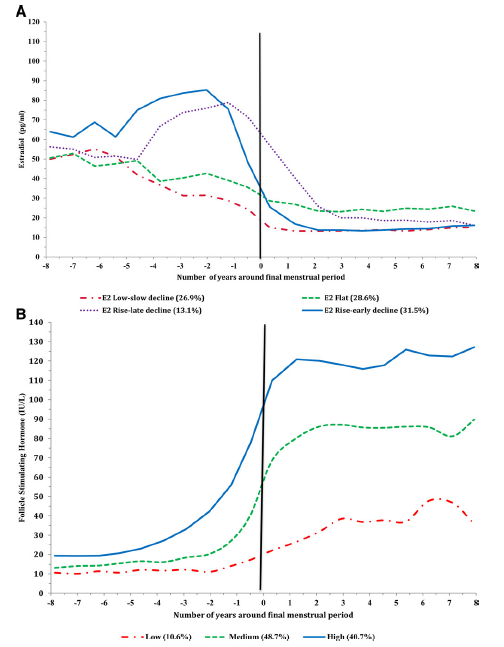
Figure 1: Trajectories of estradiol (E2; A) and follicle-stimulating hormone (B) over the menopausal transition. Adapted from https://doi.org/10.1161/CIR.000000000000091
However, estrogen is not the only hormone that declines with menopause. Oxytocin, a neurohormone with receptors located in the brain, bone, heart, and the reproductive tract, is released from the posterior pituitary under the influence of the hypothalamic oxytocin neurons and also declines [2,3]. During the reproductive years, estrogen produced by the ovaries increases oxytocin and oxytocin receptor expression in the brain and other tissues [2,3]. Oxytocin Receptor gene (OXTR) has genetic association with various psychological behavior variances [6]. Hugging, cuddling and social interactions with loved ones cause oxytocin release in the hypothalamus. In postmenopausal women, a decrease in estrogen level may lead to compromised oxytocin signaling thereby having negative implications on social and emotional wellness [2]. However, dance and the social interaction promotes release of oxytocin which appears to have a positive impact in postmenopausal women, including beneficial cardiovascular health and mental wellbeing [7-9]. (Figure 2 and 3)
Oxytocin receptors have been identified in the heart, and the binding of oxytocin to cardiac receptors helps in affecting the tone of the blood vessels, which has a positive effect in decreasing the pre-load of the left ventricle and also positive ionotropic effects on the heart [4]. The role of the oxytocin receptor has been linked to positive benefits in endothelial function by the release of nitric oxide along with an improvement in vascular function. Oxytocin has also been shown to have a positive effect on controlling blood pressure.
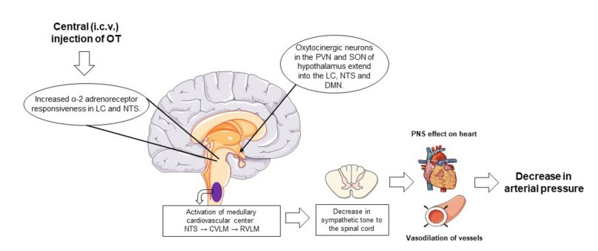
Figure 2: Schematic representation of the centrally mediated actions of oxytocin treatment on blood pressure regulation Adapted from https://doi.org/10.3389/fpsyg.2020.02139
The mechanism by which oxytocin helps in regulating blood pressure is by mediating its action via the central and peripheral nervous systems. Figure 1 demonstrates the immediate effect on blood pressure with intravascular injections in the cerebrum, resulting in enhanced expression of alpha-2 responses. It has also been shown that subcutaneous injections of oxytocin can reduce blood pressure by modulating its action through the autonomic nervous system and peripherally acting on the cardiovascular and renal systems. Vascular resistance in the peripheral blood vessels are also reduced and this results in increased blood flow to the renal vasculature, thereby having a natriuretic effect with the release of atrial natriuretic peptide and thereby decreasing blood volume. This also results in inhibiting renin and aldosterone, thereby causing diuresis as detailed in (Figure 3).
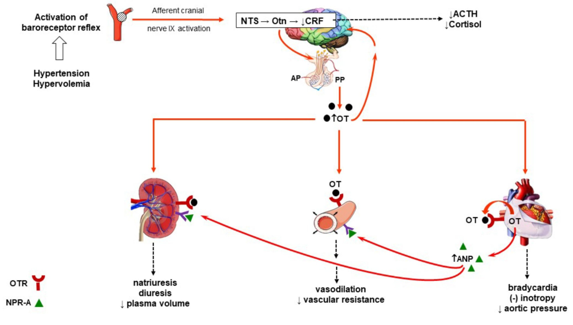
Figure 3: Schematic diagram of the role of OT in the regulation arterial blood pressure.Adapted from : https://doi.org/10.3389/fpsyg.2020.02139
Oxytocin has been of recent interest with its role in mood enhancements, social interactions, and stress regulation [10]. (Figure 4) It is well-known that exercise in general helps in stress regulation. However, there is much debate as to which particular exercise has the best impact on stress regulation and hence, indirectly have positive benefits on heart rate, blood pressure, and cardiovascular health. Exercise mediates the beneficial effects of stress regulation through the release of multiple hormones and endorphins. However, dance is a particular exercise that has been shown to release not only endorphins, but also oxytocin, which has positive cardiovascular outcomes in women, especially after menopause. The mechanism by which dance promotes the release of oxytocin is thought to be due to social interactions and bonding experience associated with dance with evidence showing more oxytocin release with synchronized duets or group performances [8].
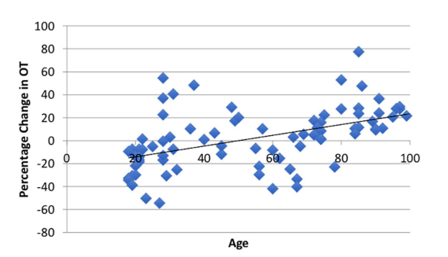
Figure 4: Zak et al demonstrated in their experiment that there was a significant positive relationship between increase in age and ΔOT from an emotional stimulus.
Menopause is an event in a woman’s life that is natural and universal. However, this life cycle brings about various challenges and changes from a biological, social, and psychological standpoint which has negative consequences on health and general well-being. However, a better quality of life by adopting a healthy lifestyle can help to mitigate the adverse life trajectories related to menopause and age. However, for some, menopausal symptoms are severe and affect their quality of life [7]. Along with this comes other risk factors such as obesity and cardiometabolic risks like hypertension, dyslipidemia, and diabetes.
Lifestyle changes have been proven to manage menopause related well-being and the aging process. Engaging in regular exercise in the peri and post-menopause phases have been proven to be a pathway to better global health by increasing fitness and reducing the risk of chronic diseases like Type 2 diabetes, cardiovascular disease, obesity, and cancer [7,9]. It also offers psychosocial and overall mental well-being, thereby promoting a good quality of life. Yet, women find it extremely challenging to incorporate regular exercise into their lifestyle. These barriers could be generalized or something like a lack of time or a lack of positive experiences with exercise. There has been some research where lifestyle and behavioral changes like exercise can be influenced by psychosocial factors which promote doing things that lead to feelings of enjoyment, well-being, and better self-image.
In recent years, dance as an exercise in menopausal women has shown an increase in benefits, suggesting that benefits in the relief of menopause symptoms and enhancing general and psychological well-being along with overall quality of life. This was exhibited in all dancing types, whether it was traditional dance or sports-related dances or dance movement therapy.
There were reduced levels of low-density lipoprotein levels and higher high-density lipoprotein levels, thereby impacting cardiovascular benefits [11]. The positive health impact of dance is not only seen all the way to the molecular level with the decrease in cholesterol, or improvement in glucose intolerance and weight control It also increases some hormones like serotonin, dopamine, endorphins, and as of recent interest, oxytocin.
In fact, dance has been shown to be the only exercise that releases oxytocin by a unique mechanism, thereby enhancing cardiovascular health. Oxytocin is produced in the posterior pituitary gland within the hypothalamus. The oxytocinergic system in the body has been associated with modulation of complex behavior and social cognition. Not only has it been linked to infant-mother bonding, but also to social communication, general sense of well-being, and empathic abilities. Studies done on subjects while dancing after intranasal administration of oxytocin in dancers showed more synchronization in body movement, indicating that the oxytocinergic system is influenced by kinesthetic empathy.
The most common pharmacologic management during this phase are hormone replacement therapy and the newly approved dual Neurokinin Receptor agonist that is approved for vasomotor symptoms. All patients may not be ideal candidates for hormone replacement therapy due to contraindications like personal or family history of particular cancer. There also are limited data on any other kind of exogenous pharmacologic treatment that may be beneficial in this phase of a woman's life especially in terms of cardiovascular health
During a woman’s life, oxytocin parallels estrogen levels in the body and hence, during menopause, due to the declining level of estrogen, oxytocin also diminishes (Figure 5). In order to confer cardiovascular benefits soon after menopause, studies have suggested hormone replacement therapy to be started. As combined hormonal therapy can be linked to sodium and water retention due to estrogen components via the renin-angiotensin-aldosterone system, drospirenone, a unique progesterone with anti-aldosterone properties, can be used to counteract and reduce blood pressure in post-menopausal women. However, all women may not be ideal candidates for hormonal therapy.
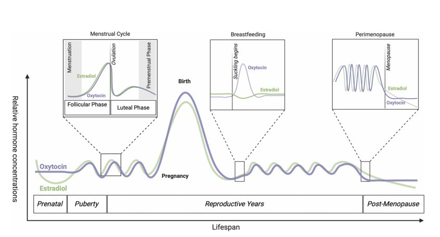
Figure 5: Oxytocin and estradiol concentration fluctuations across the lifespan in females.
Adapted from https://doi.org/10.1016/j.neubiorev.2024.105765
So, for post-menopausal patients who are not candidates for menopausal hormone therapy, oxytocin may be a useful adjunct for promoting cardiovascular health. Although oxytocin has been shown to have cardiovascular benefits in multiple studies, it is not commercially available as an FDA approved drug in the United States. Therefore, non-pharmacological ways of increasing oxytocin in menopausal women should be recommended. As oxytocin is released with dance due to kinesthetic empathy dance appears to be an exercise that should be a recommended form of exercise in menopausal women Oxytocin has been shown to be released endogenously with prosocial behavior. As dance has been shown to increase endogenous oxytocin release because of its prosocial association, it may be an ideal form of exercise in menopausal and postmenopausal women specially who are not candidates for hormone replacement therapy.
Besides the benefit of oxytocin associated with dance, dance has also been shown to have a substantial influence of wellness in women in the menopausal age group. Ended this age group women due to hormonal changes suffer from unusual weight gain and lack of
self-confidence due to negative body image. Done as an exercise in this phase of transitioning to women's life has been shown to improve self-confidence and self image is very crucial at this phase of a woman’s life. For a woman to go through her menopause phase, not only it is physiological changes that the woman has to deal with but there are also important psychological changes that happens during this transitional phase of their life.
Hormone replacement therapy has been standard treatment that has been available to women in this phase of their life. For menopausal symptoms newer agents are available just for symptomatic relief. However, as a woman's risk of cardiovascular disease heightened significantly with this transition phase. It is crucial at this juncture ideal recommendations need to be in place decrease the adversities associated with menopause and its negative impact on cardiovascular health.
Limited data suggest that oxytocin release is associated uniquely with dance as a form of exercise along with other beneficial hormones and endorphins. The mechanism most likely associated with release of oxytocin during dance is probably related to its social bonding and anesthetic influence involved in dance. However, randomized control trials to look at the levels of oxytocin release along with dance are not currently available. Given the beneficial effect of oxytocin, especially in terms of cardiovascular and mental wellbeing with the menopause transition, dance may have a future role as a directed therapy in postmenopausal women especially in those who are not candidates for hormonal therapy Delving deeper into the possibility of dance as a form of recommended exercise for release of endogenous oxytocin for its cardiovascular benefits will give a new dimension in the treatment of menopausal symptoms and preventive cardiology in this highly vulnerable women population.
Acknowledgments/Funding/Disclosures
This research did not receive any specific grant from any funding agency in the public, commercial or not-for-profit sector.
Conflict of Interest
None
El Khoudary, Samar R., Brooke Aggarwal, Theresa M. Beckie, Howard N. Hodis, Amber E. Johnson, Robert D. Langer, Marian C. Limacher et al. "Menopause transition and cardiovascular disease risk: implications for timing of early prevention: a scientific statement from the American Heart Association." Circulation 142, no. 25 (2020): e506-e532.
Dunietz, Galit Levi, Lucas J. Tittle, Sunni L. Mumford, Louise M. O’Brien, Ana Baylin, Enrique F. Schisterman, Ronald D. Chervin, and Larry J. Young. "Oxytocin and women’s health in midlife." Journal of Endocrinology 262, no. 1 (2024).
Quintana, Daniel S., Bernt D. Glaser, Heemin Kang, Emilie SM Kildal, Kristin Audunsdottir, Alina M. Sartorius, and Claudia Barth. "The interplay of oxytocin and sex hormones." Neuroscience & Biobehavioral Reviews 163 (2024): 105765.
Jankowski, Marek, Tom L. Broderick, and Jolanta Gutkowska. "The role of oxytocin in cardiovascular protection." Frontiers in psychology 11 (2020): 2139.
Rosano, G. M. C., C. Vitale, G. Marazzi, and M. Volterrani. "Menopause and cardiovascular disease: the evidence." Climacteric 10, no. sup1 (2007): 19-24.
Saphire-Bernstein, Shimon, Baldwin M. Way, Heejung S. Kim, David K. Sherman, and Shelley E. Taylor. "Oxytocin receptor gene (OXTR) is related to psychological resources." Proceedings of the National Academy of Sciences 108, no. 37 (2011): 15118-15122.
Godoy-Izquierdo, Débora, Carlos de Teresa, and Nicolás Mendoza. "Exercise for peri-and postmenopausal women: Recommendations from synergistic alliances of women's medicine and health psychology for the promotion of an active lifestyle." Maturitas 185 (2024).
Josef, Liad, Pavel Goldstein, Naama Mayseless, Liat Ayalon, and Simone G. Shamay-Tsoory. "The oxytocinergic system mediates synchronized interpersonal movement during dance." Scientific Reports 9, no. 1 (2019): 1894.
Liao, Diying, Lili Mo, and Maowei Chen. "The Effectiveness of Dance Interventions on Health-Related Outcomes in Perimenopausal, Menopausal, and Postmenopausal Women: A Systematic Review and Meta-Analysis." In Healthcare, vol. 13, no. 8, p. 881. MDPI, 2025.
Zak, Paul J., Ben Curry, Tyler Owen, and Jorge A. Barraza. "Oxytocin release increases with age and is associated with life satisfaction and prosocial behaviors." Frontiers in behavioral neuroscience 16 (2022): 846234.
Norman, Rosana E., Munkhtsetseg Byambaa, Rumna De, Alexander Butchart, James Scott, and Theo Vos. "The long-term health consequences of child physical abuse, emotional abuse, and neglect: a systematic review and meta-analysis." PLoS medicine 9, no. 11 (2012): e1001349.