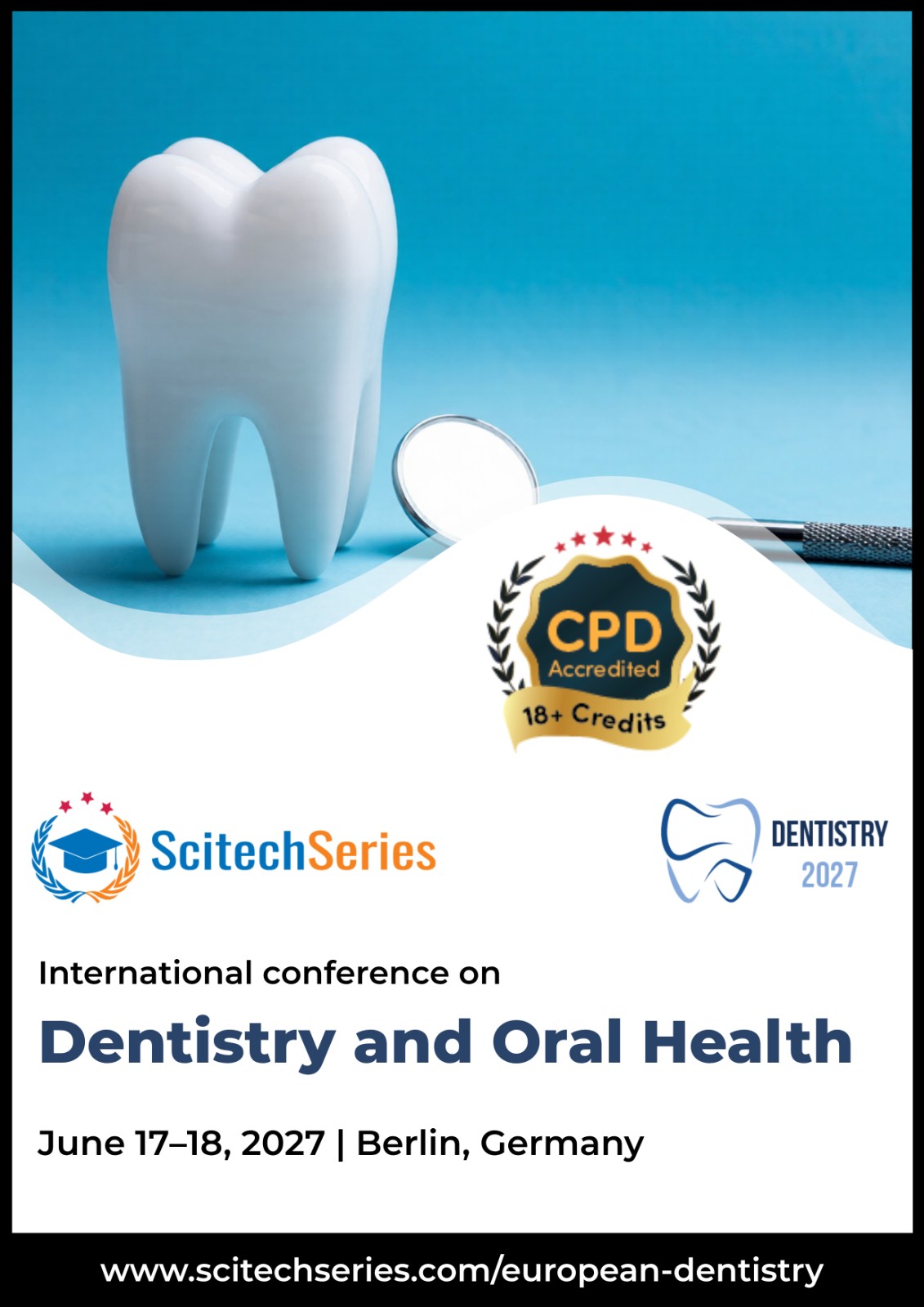


May 20–21, 2026 | Barcelona, Spain
Thabang Siwela
Bhandal Dental Group, , UK
Thabang Siwela, is a dentist trained at Charles University. She began her career in Botswana’s government hospital system be fore continuing her practice with in the United Kingdom’s National Health Service. Working across diverse healthcare environments has shaped her interest in the psychological and cultural influ ences on oral health behavior. Dr. Siwela advocates for rela tionship-centered dentistry that integrates clinical excellence with emotional intelligence to foster trust, improve patient experienc es, and influence generational oral health outcomes.
Dentistry is undergoing a critical shift from a procedure-driven discipline to one rooted in prevention, preservation, and systemic health. Increasing evidence linking oral conditions–particularly periodontal disease–to systemic disorders such as cardiovascular disease, diabetes, and adverse pregnancy outcomes has redefined the role of the dental professional within broader healthcare. However, this evolution is occurring in parallel with a powerful and often conflicting trend: the global rise of aesthetic driven dentistry. Contemporary cultural and digital influences have normalised the pursuit of an idealised “white smile,” often characterised by uniformity and high-value brightness. This has reshaped patient expectations, with increasing demand for rapid, transformative treatments that prioritise appearance over biological integrity. Phenomena such as “Turkey teeth,” involving aggressive full-coverage restorations in young, otherwise healthy patients, alongside the premature adoption of implants and even complete dentures, highlight a growing disconnect between aesthetic desire and clinical necessity. This presentation critically examines how these trends intersect with the oral-systemic paradigm. It will explore the short- and long-term biological consequences of overtreatment, including pulpal compromise, chronic inflammation, peri-implant disease, and their potential systemic implications. Emphasis will be placed on the ethical responsibilities of clinicians navigating patient autonomy in the context of misinformation and social influence. By integrating current clinical evidence with emerging sociocultural dynamics, this talk positions the modern dentist as both a healthcare provider and an advocate for responsible care. It argues for a reorientation toward minimally invasive, prevention-led approaches that safeguard not only oral health but overall wellbeing. Ultimately, the session challenges the profession to reconcile aesthetic innovation with biological preservation in an era where the definition of a “healthy smile” is increasingly contested.