


Amitabh Mitra*
*Retired Head of Emergency Medicine and Gender Based Violence in a tertiary facility in Eastern Cape South Africa. He has been in the field of Trauma, Gender Based Violence and Sexual Assaults for more than forty years in the Kingdom of Bhutan, Transkei, Niger, Zimbabwe and South Africa.
*Correspondence: Amitabh Mitra, Retired Head of Emergency Medicine and Gender Based Violence in a tertiary facility in Eastern Cape South Africa. He has been in the field of Trauma, Gender Based Violence and Sexual Assaults for more than forty years in the Kingdom of Bhutan, Transkei, Niger, Zimbabwe and South Africa, E-mail: amitabh@amitabhmitra.com
Citation: Amitabh, Mitra. “An Analysis of the Correlation Between Alcohol and Drug Consumption Towards the Occurrence of Violent Behavior in High Density Areas: A Case Study of Eastern Cape, South Africa.” J Healthc Adv Nur (2025): 130. DOI: 10.59462/3068-1758.3.2.130.
Received date: 06 August 2025; Accepted date: 20 August 2025; Published date: 27 August 2025
Copyright: © 2025 Mitra A. This is an open-access article distributed under the terms of the Creative Commons Attribution License, which permits unrestricted use, distribution and reproduction in any medium, provided the original author and source are credited.
The apartheid era significantly impacted life is South Africa presently as most people are low income earners. The majority of the population reside in high density suburbs where they hardly have access to basic necessities such as water, electricity and health care. The current unemployment rate in South Africa is 32,9% and the majority of these people tend to stay in high-density areas. This has resulted alcohol and drug usage for most of the population with 43% being frequent alcohol consumers. Almost 20% of South Africans which is 1 out of every 5 adults abuse mind-altering substances, with alcohol, pain-killer and marijuana being the worst offenders, and rising figures of illicit drug use suggest the country is losing the war on drugs.
The Eastern Cape is characterized by high unemployment rates, poverty, and limited access to education and healthcare. These factors contribute to substance abuse as a coping mechanism. Alcohol is widely consumed, while the use of illicit drugs, including methamphetamine and cannabis, is prevalent. The combination of these substances often leads to impaired judgment and aggressive behavior. In most instances younger individuals (ages 18-25) exhibited higher rates of both substances use and violent behavior compared to older individuals (ages 26-40). Gender differences were evident, with males reporting higher levels of violence associated with substance use.
The relationship between alcohol consumption and rape in the Eastern Cape is complex and multifaceted. Addressing alcohol abuse through targeted interventions could significantly reduce the prevalence of sexual violence in the region. The Eastern Cape has high rates of gender-based violence, including rape. Cultural, economic, and social factors contribute to these alarming statistics. Alcohol is a common social lubricant, but excessive consumption is linked to impaired judgment and aggressive behaviors, including sexual violence. Surveys indicate that a significant portion of the population consumes alcohol regularly, with high rates of binge drinking. Official reports suggest that the Eastern Cape has one of the highest rates of reported rapes in South Africa, with many cases occurring in contexts involving alcohol. In this given study the researcher will analyzed the findings of data collection carried out in Eastern Cape South Africa. The findings will help highlight how drugs and alcohol are directly related to the occurrence of violent behavior in the study site.
Keywords: Alcohol and drug consumption; High Density; Eastern cape; South Africa; Violent behavior
The relationship between alcohol and drug consumption and the incidence of rape is a significant public health concern. Research has shown that substance use can impact both perpetration and victimization in sexual violence cases. Alcohol is often linked to impaired decision-making and lowered inhibitions, which can increase the likelihood of aggressive behaviors, including sexual violence [1]. Many studies indicate that a significant percentage of rape incidents involve one or both parties being under the influence of alcohol. Victims who are intoxicated may struggle to give clear consent or resist, increasing their vulnerability to sexual assault. Some drugs can lead to heightened aggression and paranoia in users, which may contribute to violent behaviors, including rape. Many individuals who engage in sexual violence may use both alcohol and drugs, compounding the effects of each and increasing the likelihood of violent incidents. Research indicates that co-use can further diminish the capacity for rational decision-making and impulse control [2]. In essence younger individuals, particularly males, are often at a higher risk of both perpetrating and being victims of sexual violence under the influence of substances. Societal norms around alcohol consumption and masculinity can perpetuate environments where sexual violence is normalized.
The study site for this study is Mdantsane which is located in the Eastern Cape province of South Africa.Mdantsane is a South African urban township situated 15 km away from East London .It is the second largest township in Eastern Cape and 17th largest in the Top 20 largest townships in South Africa. The location is prone to violent behaviors because it is a high-density area where alcohol and drug consumption is common. The majority of the people live in unstable shacks which are overpopulated. Alcohol consumption is also a common aspect in such areas. This makes the occurrence of fall related injuries fairly common. In this given study, the researcher will analyze the demographic, severity and frequency of such injuries [3].
Demographic characteristics
Mdantsane is a large township located near East London in the Eastern Cape province, not Cape Town. It is known for its vibrant community and diverse population of approximately 100,000 residents, making it one of the largest townships in South Africa. A significant portion of the population is under the age of 25, reflecting a youthful demographic [4]. This can lead to challenges such as high unemployment rates and a need for educational resources. The population is relatively balanced, though some areas may show a slightly higher number of females, which is common in many South African communities due to various socio-economic factors [5].
The overall population for the study is 651 participants with 318 male and 33 female people included in the findings. The 0 to 14 age group has the largest number of participants which is 206. The 15 to 24 age group has 47 participants, 25 to 34 has 100 participants, 35 to 44 has 76 participants, 45 to 54 has 92 participants and the 54 and above age group has 131 participants. The male participants make up 48,8% of the population whilst the female participants consist of 51,2%. In the findings 9,0 % of the participants are married, 41,9 are single, 2,3 % are widowed and 46,7 are unspecified (Figure 1).
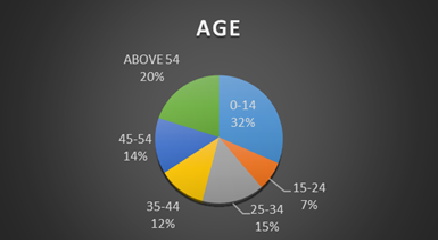
Figure 1. Above depicts the ages of the participants
Frequency and sites of the injuries
The frequency of injuries because of alcohol and drug consumption is directly related to what is occurring within the external environment. Injuries occur more frequently on Sunday and Friday because these are the days most people have likely consumed alcohol. This alters the participants reasoning capacity [6]. They can make impulsive decisions that will likely result in permanent damage. Gait and balance disorders and the use of medications that affect cognition and physical function are associated with a higher risk of falling or with sustaining an injury from a fall among older adults. Additionally, alcohol consumption may contribute to fall risk as it can lead to gait and balance impairments and cognitive changes [7]. The research found out that most of the injuries occurred on Sunday with the day accounting for 19.6% of the reported injuries in the sample population and Saturday was the least dangerous day as it accounted for none (0%) of the injuries. This does correlate with the location of the injuries as 77.8% of them happened whilst patients were at home and the remaining 22.2% occurred somewhere like schools, gyms, sports fields etcetera (Figure 2).
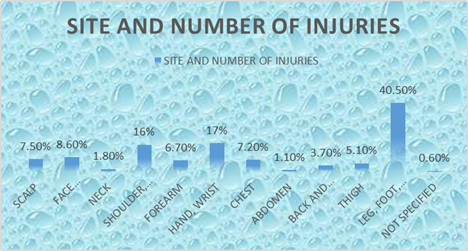
Figure 2. Above depicts the sites of the injuries
Types and severity of the wounds
A wound is an injury that breaks the skin or other body tissue. Wounds can be open, with broken skin and exposed body tissue, or closed when there is damage to tissue under intact skin. The most common complication from wounds is infection. If an infection goes undiagnosed or untreated, it can cause cellulitis a painful bacterial skin infection or spread to underlying tissue and bone, a condition known as osteomyelitis. Infected wounds can also lead to sepsis, which can cause organ failure and, in severe cases, death. In the findings the frequency of the linear wounds was 85 (13,1%), curved wounds 5 (0,8%), Puncture wounds 2 (0,3%0, swelling 359 (55%), hematoma 2 (0,3%), contusion 3 (0,5%), abrasion 16 (2,6%), dislocation 6 (0,9%), sprain/strain 54 (0,3%0, Muscle spasm 2 (0,3%), Extradural hemorrhage 1 (0,2), Burns/blisters 1 (0,2%), just pain 44 (6,7%), non-visible injury 22 (3,4%) [8].
Chronic, complex and non-healing wounds are painful and can be debilitating. If not treated properly they can eventually result in the amputation of a limb, a severe systemic reaction or potentially even death, so timely, appropriate interventions are necessary for a successful outcome. In the findings only 31,4% of the patients did not get any complications from the injury vascular injuries consisted of 0,2%,soft tissue injuries 417 (64,0), G.I perforation 1 (0,2%), Hemo 2 (0,3%), Cellutis 6 (0,9), Sepsis 1 (0,2%) , Ligament 3 (0,5%) , Tramatic conjunctivitis 1 (0,2%) , Tendon injury 1 (0,2%) and only 14 undocumented injuries (2,1%).
Outcome of the injuries
In the findings the patients who were admitted for 3 days in 11,1%, 4 days 33,3%,5 days, 22,2%, 7 to 10 days is 11,1%. The majority of the patients were discharged good condition and this consisted of 77,9% of the total population, 10,9% we discharged for further follow up, 8,4% were referred to specialists, 2,6% were referred to other hospitals and 0,2% had other outcomes [9]. This highlights that with adequate care the majority of the patients can be discharged in good condition. If more training and awareness is provided to communities, it will minimize the occurrence of fall related injuries.
In conclusion the report shows that most of the medical injuries in Mdantsane occur on weekends and at home. This might be due to activities done to clean the exterior of the house as is shown by males outnumbering females. The results significantly highlight how injuries are a common occurrence in high density areas. The lack of formal employment results in most people partaking in alcohol and drugs consumption. It is common for most people to partake in violent behaviors whilst under the influence of alcohol and drugs. The most affected age group are the youthful population because they are unemployed. They can also be victims of their environment as they live in informal shacks in areas where there are not proper roads. They can be affected by external factors which are beyond their control.
James, Spencer L., Lydia R. Lucchesi, Catherine Bisignano, Chris D. Castle, Zachary V. Dingels, Jack T. Fox, Erin B. Hamilton et al. "The global burden of falls: global, regional and national estimates of morbidity and mortality from the Global Burden of Disease Study 2017." Injury prevention 26, no. Suppl 2 (2020): i3-i11.
Laing, J., V. Y. Kong, J. L. Bruce, G. L. Laing, D. L. Clarke, and J. P. Da Costa. "A review of geriatric injuries at a major trauma centre in South Africa." South African Medical Journal 110, no. 1 (2020): 44-48.
Peterson, Elizabeth Walker, Laura Rice, and Sahel Moein. "Factors Associated with Fear of Falling and Fall-related Injuries Among Individuals Using Wheelchairs and Scooters." The American Journal of Occupational Therapy 78, no. Supplement_2 (2024): 7811500281p1-7811500281p1.
Pswarayi, R., and M. S. Moeng. "Trauma patients at risk of in-hospital mortality." J. Surgical Case Reports and Images 5, no. 5 (2022): 2690-1897.
Peltzer, Karl. "Mental health, lifestyle factors and subsequent falls among ageing adults in South Africa." Journal of Psychology in Africa 33, no. 4 (2023): 412-416.
Qwemeshe, N., N. Malebo, and K. Lebelo. "Health and safety incidents at a power utility in the Eastern Cape province of South Africa." Occupational Health Southern Africa 29, no. 4 (2023): 185-188.
Rogers, Christine, and Athene Irving. "Nurses’ perspectives on inpatient falls in a large academic hospital in South Africa." Curationis 46, no. 1 (2023): 2479.
Smith, Lee, Guillermo F. Lopez Sanchez, Nicola Veronese, Pinar Soysal, Mark A. Tully, Trish Gorely, Peter M. Allen et al. "Association between self-reported visual symptoms (suggesting cataract) and self-reported fall-related injury among adults aged≥ 65 years from five low-and middle-income countries." Eye 38, no. 15 (2024): 2920-2925.
Veronese, Nicola, Lee Smith, Mario Barbagallo, Lin Yang, Liye Zou, Josep Maria Haro, and Ai Koyanagi. "Sarcopenia and fall-related injury among older adults in five low-and middle-income countries." Experimental gerontology 147 (2021): 111262.